Design Thinking × AI
AI has become part of how I work with Design Thinking. I use it to move faster through research, explore ideas, challenge my assumptions and turn early thinking into something I can test. It does not replace the process for me. It helps me spend less time on repetitive work and more time understanding the problem and making design decisions.
Category:
Design Thinking @ AI
Author:
Pavel Danyi
Read:
11 mins
Location:
Prague
Date:
Research without getting lost in the data
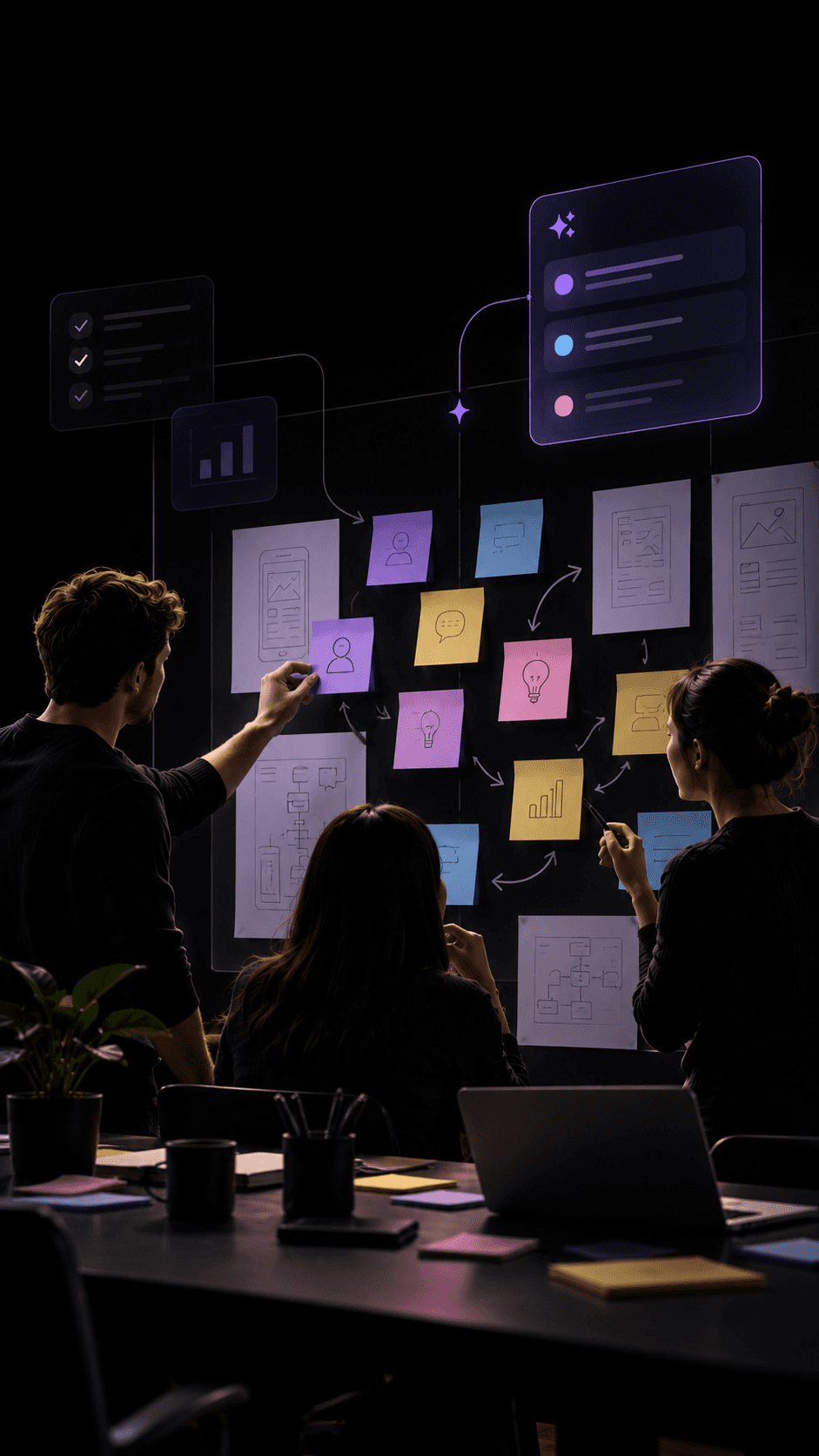
One of the first places I use AI is research. When I have interview notes, transcripts, survey responses or other feedback, AI helps me get a first overview much faster. I can ask it to find recurring themes, group similar comments or highlight areas that deserve a closer look. What I find most useful is not the summary itself, but what it helps me notice. I can use AI to challenge my first interpretation, ask what I might be missing, or look at the same research from a different angle. I still go back to the original research before making a decision. AI helps me get through the information faster. I decide what it actually means.

From blank page to something I can test
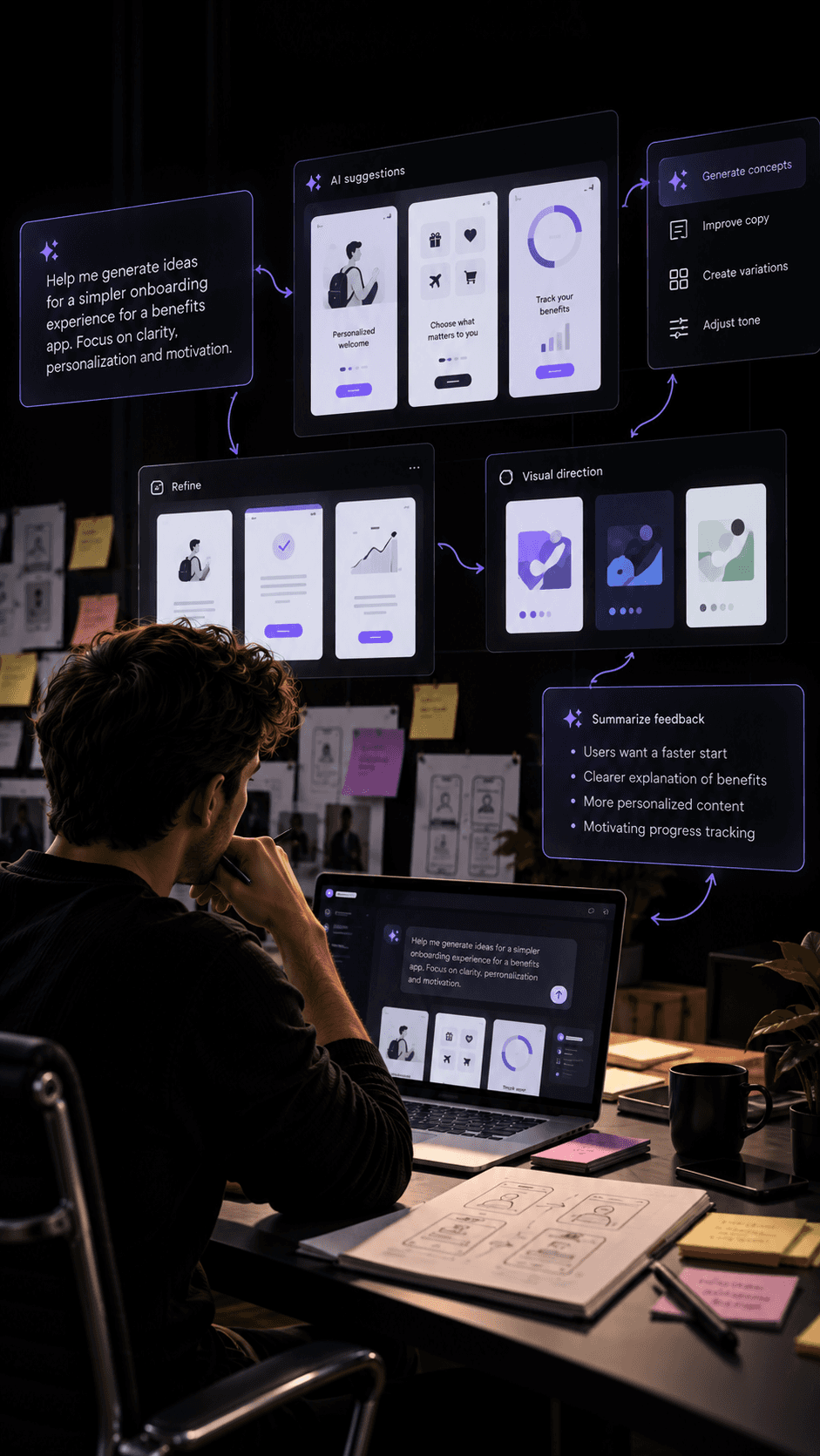
AI is probably most useful to me when I get stuck between a problem and a possible solution. I can use it to generate alternative ideas, reframe a challenge, explore different user scenarios or simply give me more directions to consider. I also use it when moving into prototyping. Instead of spending too much time perfecting the first idea, I can quickly create different flows, interface concepts, copy or visual directions and compare them. This changes the way I prototype. I do not need to be certain that an idea is good before I make it. I can make something quickly, look at it, challenge it and move on.
A second opinion, not a second designer
The part I find most valuable is probably using AI as a second opinion. I can give it a problem, a user flow or an early concept and ask it to look for gaps, assumptions or potential issues. Sometimes it confirms what I was already thinking. Sometimes it gives me an angle I had not considered. And sometimes the answer is simply not useful. That is also valuable because it forces me to explain why I disagree. That is how I see AI in my Design Thinking practice. It helps me research faster, explore more options and iterate earlier, but I still make the decisions. The important part is not whether AI can design something for me. It is whether it helps me think more clearly about what I should design in the first place.


