My Surf
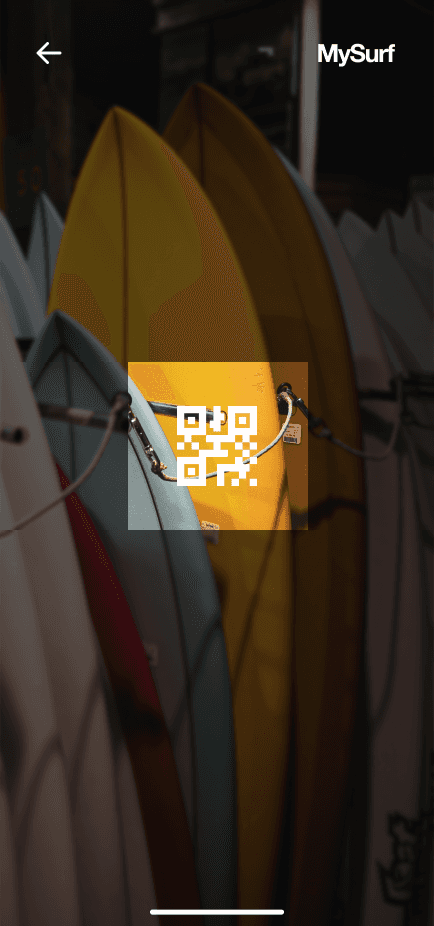
My Surf represents a 'scan-and-go' concept for surfboard rentals, eliminating the need for traditional shops. Operating through automated hubs at key beach locations, the app allows users to unlock equipment instantly via QR code. Beyond convenience, My Surf prioritizes safety by automatically notifying the local Coastal Guard upon rental activation, creating a safer environment for solo surfers.
Year:
2020
Category:
Product Design / UX & UI
Client:
Concept proposal
Duration:
3 weeks
Location:
Perth, Western Australia
Tools:
Figma
Design process:
Design Thinking
Surf
Ocean
Freedom
Experience
The project itself :
The context
Living in Western Australia, surfing is a way of life. However, I noticed a recurring gap in the market: rental shops operate on strict hours, limiting spontaneous sessions, and tourists often engage in risky solo surfing without local knowledge. This project was born out of a desire to bridge the gap between accessibility and safety.
Hypothesis:
Surfers struggle with rental logistics from traditional shops and lack real time safety updates
Goal:
To design an on demand rental ecosystem where users can access equipment 24/7 via automated hubs using a simple QR scan. The secondary, yet critical goal, is to integrate a safety protocol that automatically syncs active sessions with the Coastal Guard for real-time monitoring.
My role:
Solo UX/Product Designer responsible for the end to end process, from service design concepts and user flows to the final UI and safety feature integration.
Responsibilities:
conducting user research
service design mapping
user flows & wireframing
high fidelity prototyping
safety system logic
usability testing
All about the user :
Understanding
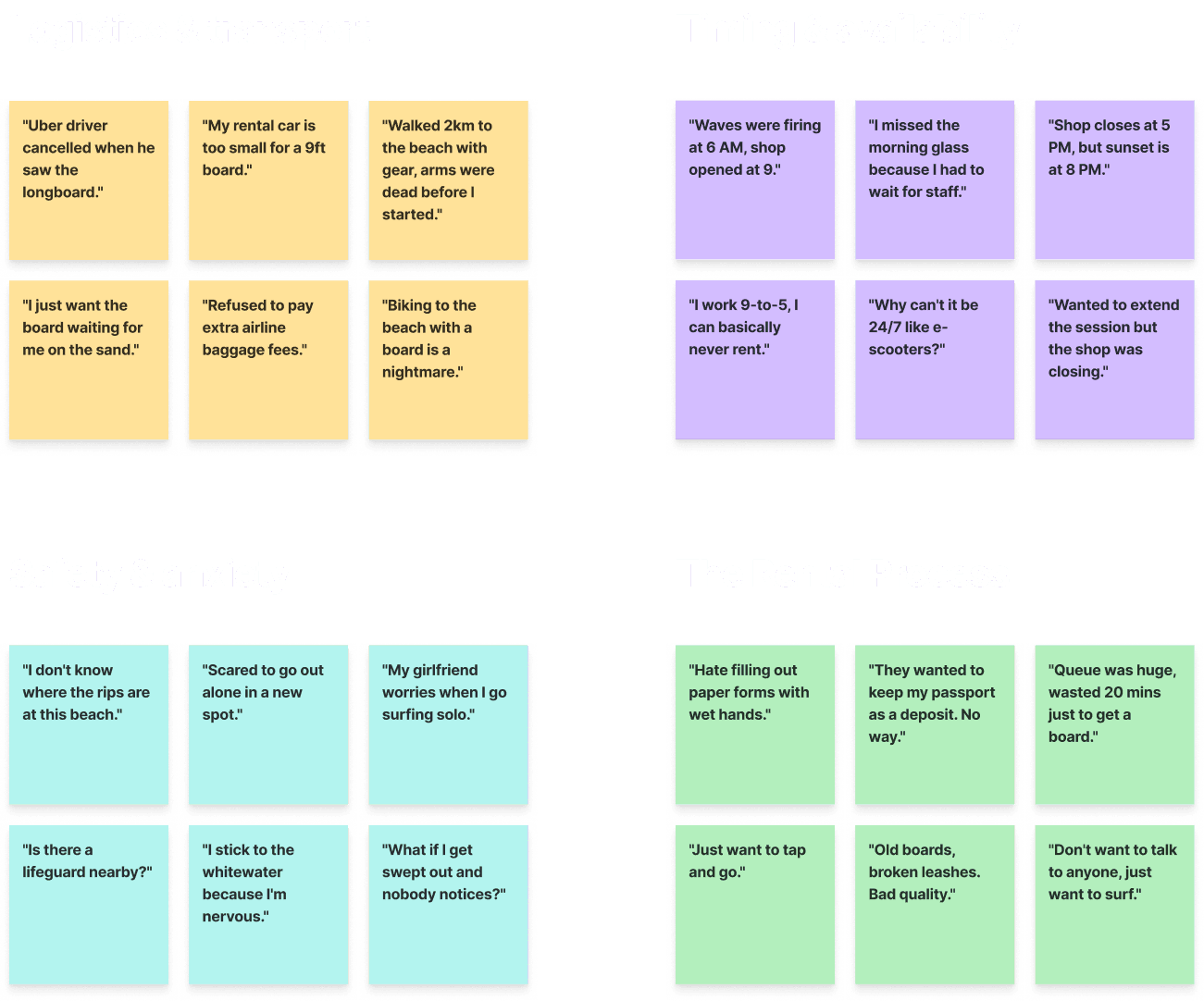
Conducted 6 semi structured interviews with locals, tourists, and backpackers at popular Perth beaches (Scarborough, Cottesloe). Goal: Identify barriers to spontaneous coastal surfing. Key insights synthesised into clusters informing UI challenges
Key research insights
& user needs
Validates hypothesis: QR lockers address logistics/transport pains; real-time alerts tackle safety anxiety
User Personas
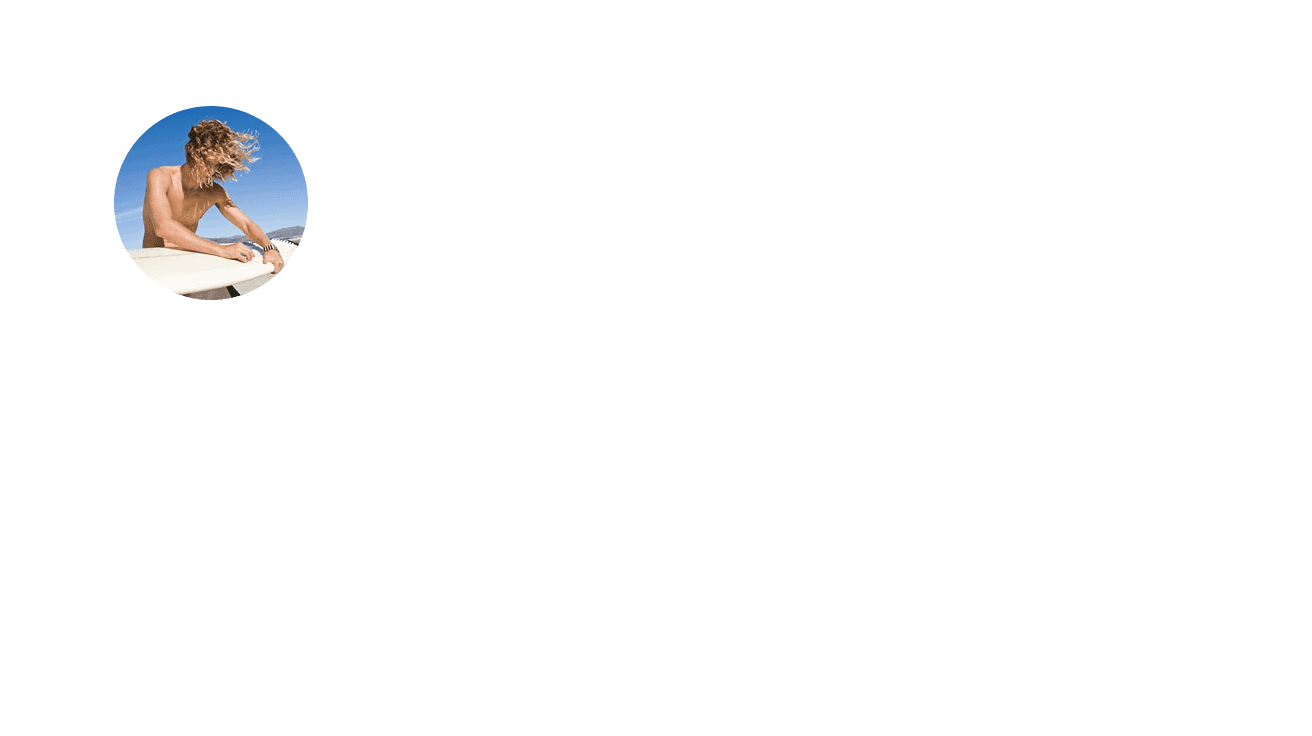
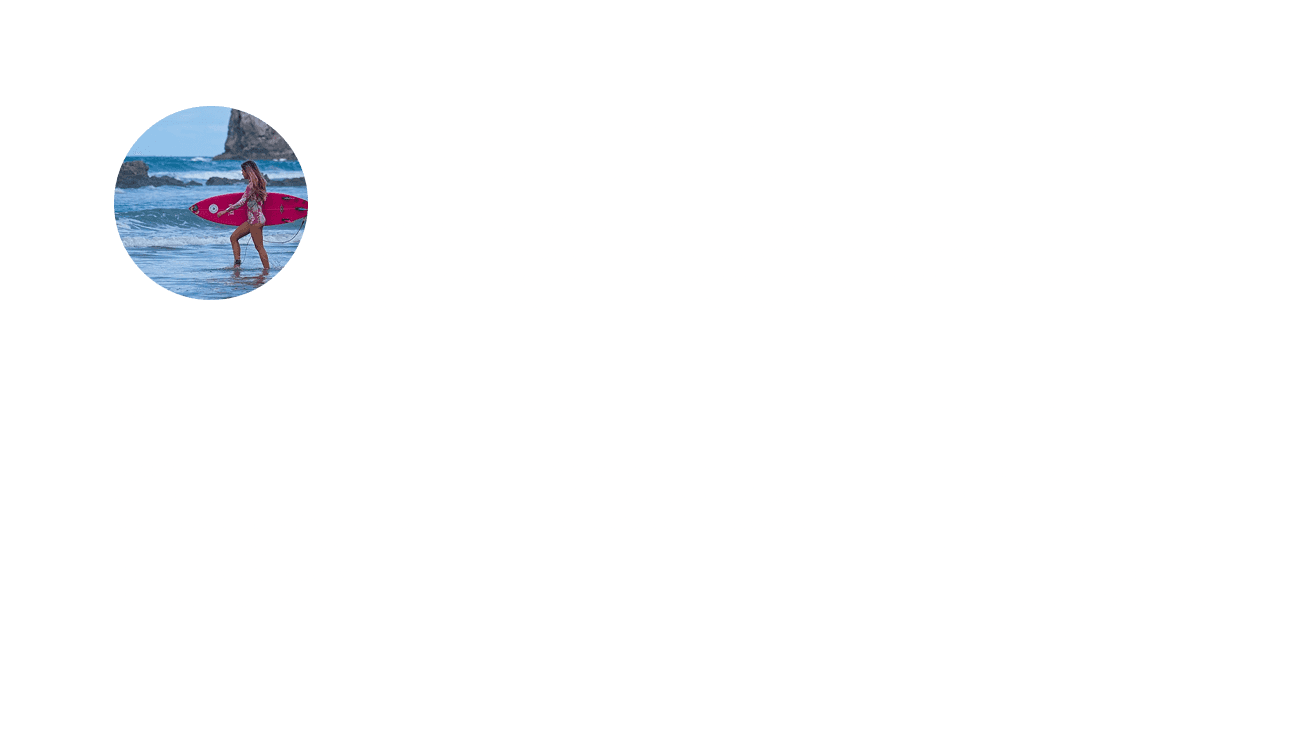
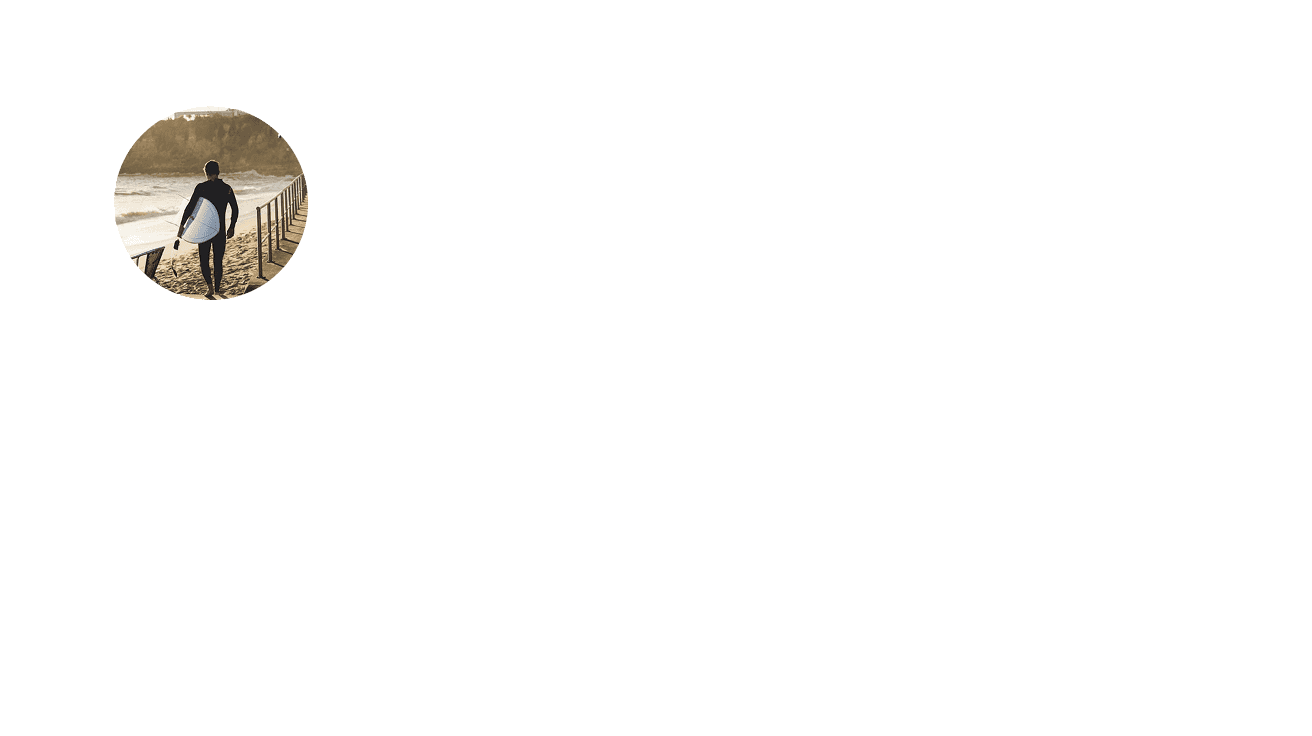
The following personas were developed by synthesising qualitative insights from in depth user interviews. By analysing recurring themes in user narratives specifically regarding spontaneity, logistics, and safety, I identified four distinct behavioral archetypes that the product must serve.
How might we
Based on the user insights and the 'Lucas' persona, I reframed the core problems into opportunities using How Might We (HMW) questions. This bridged the gap between research and the ideation phas
Logistics & spontaneity (Lucas)
How might we eliminate the logistical burden of transporting equipment so Lucas can surf spontaneously between meetings?
Accessibility & time (Sarah)
How might we decouple rental access from shop opening hours to accommodate early-morning surfers like Sarah?
Safety & confidence (Ben)
How might we provide a digital safety connection that gives Ben the confidence to enter the water without an instructor present?
Ideation & prioritisation
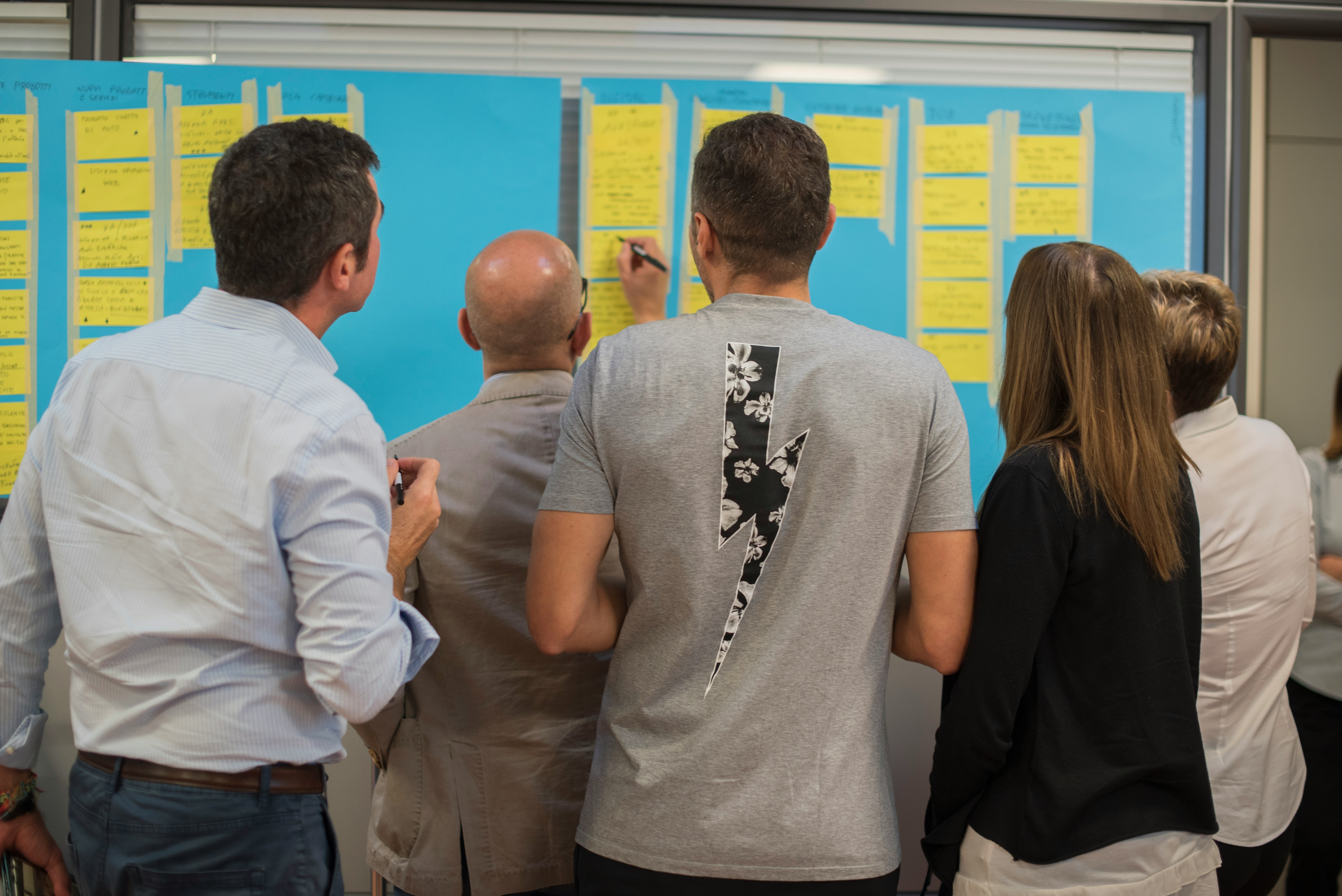
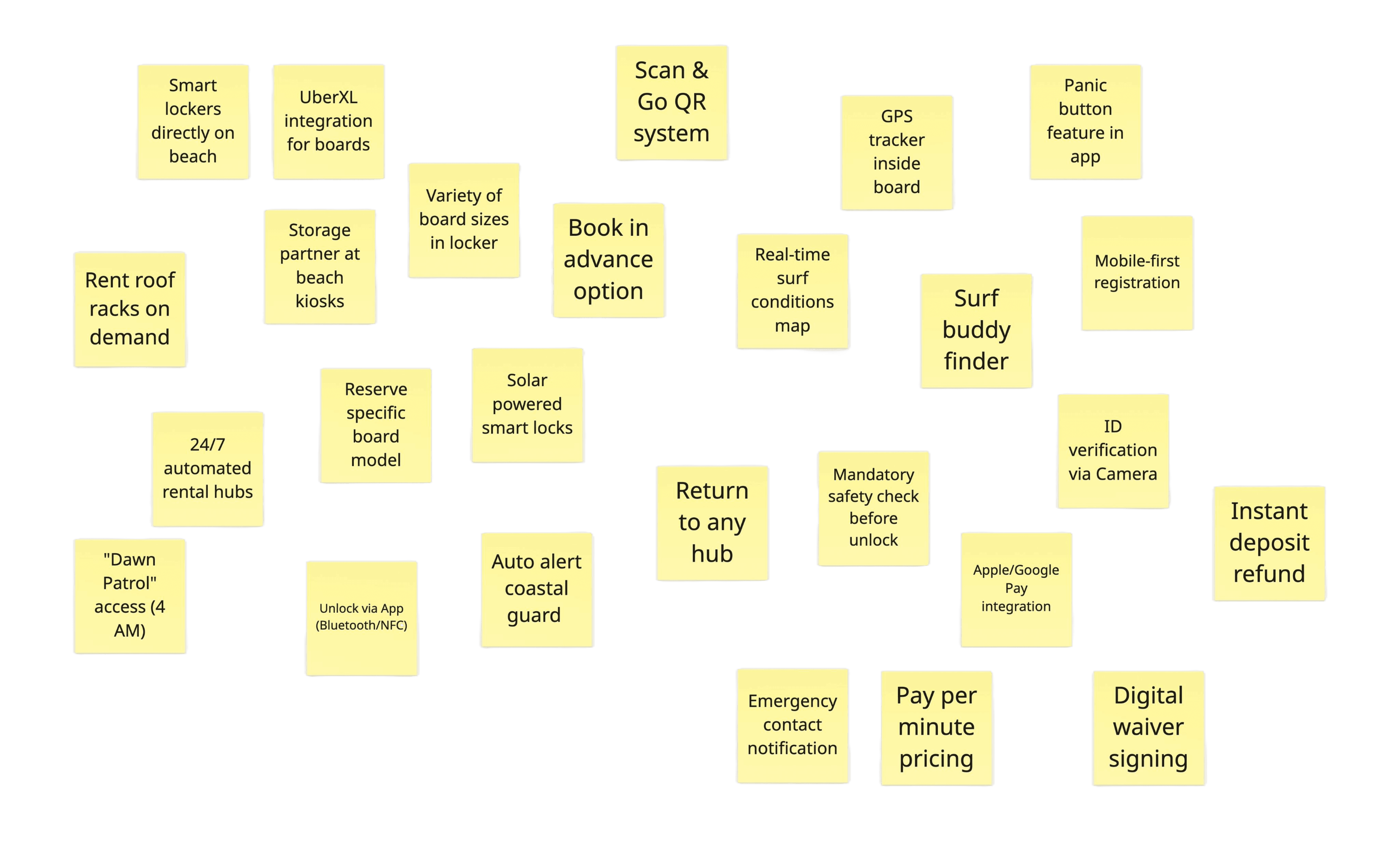
I facilitated a co creation workshop with local surfers and backpackers to generate solutions directly with the target audience. We used Dot Voting to filter the ideas, prioritising high impact features for the MVP
From Concept to Viable Business:
Define & strategy
Transitioning from ideation to strategy, I needed to validate that the proposed features specifically the smart lockers and safety integration could form a sustainable business ecosystem. The goal was to map the strategic fit between user needs and business viability before commencing detailed design work.
Business model canvas
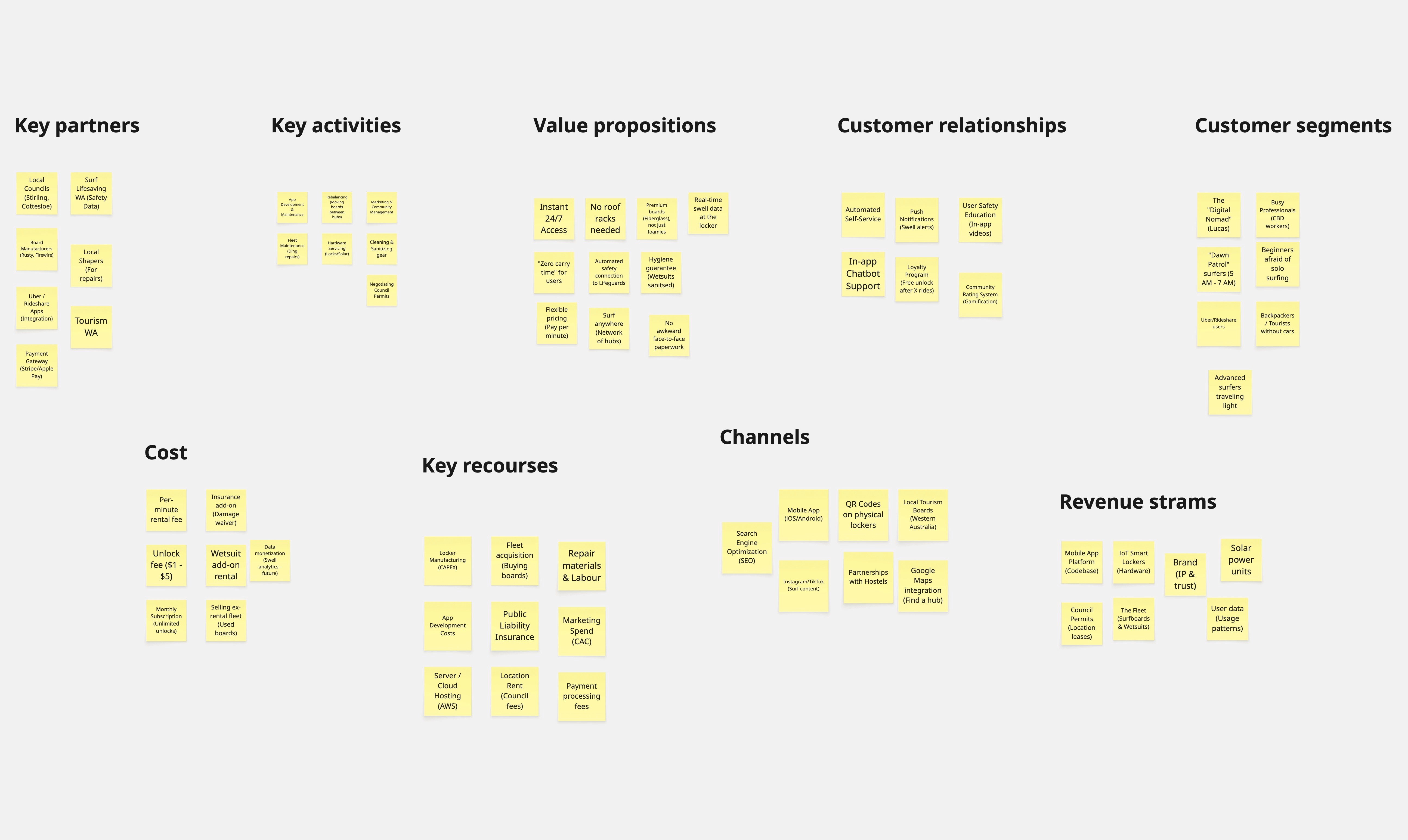
While the ideation phase confirmed user desirability (what surfers want), I needed to validate the product's viability (how it functions as a business). I utilised the Business Model Canvas to map the entire ecosystem defining how the automated locker network, safety integrations, and revenue models work together to create a sustainable service.
The canvas revealed a critical shift in the business model: moving from traditional daily rentals to a pay per minute utility model (similar to e scooters). This captures the 'spontaneous' market segment while the Coastal guard integration transforms safety from a liability risk into a unique competitive advantage
from strategy to sketch
Concept development
Translating strategic definitions into tangible solutions. In this phase, I moved from abstract requirements to visual concepts. I started by mapping the holistic service ecosystem using Visual Thinking to ensure the physical and digital touchpoints worked in harmony, before using Crazy 8’s to rapidly iterate on the specific user interface interactions
Visual thinking big picture
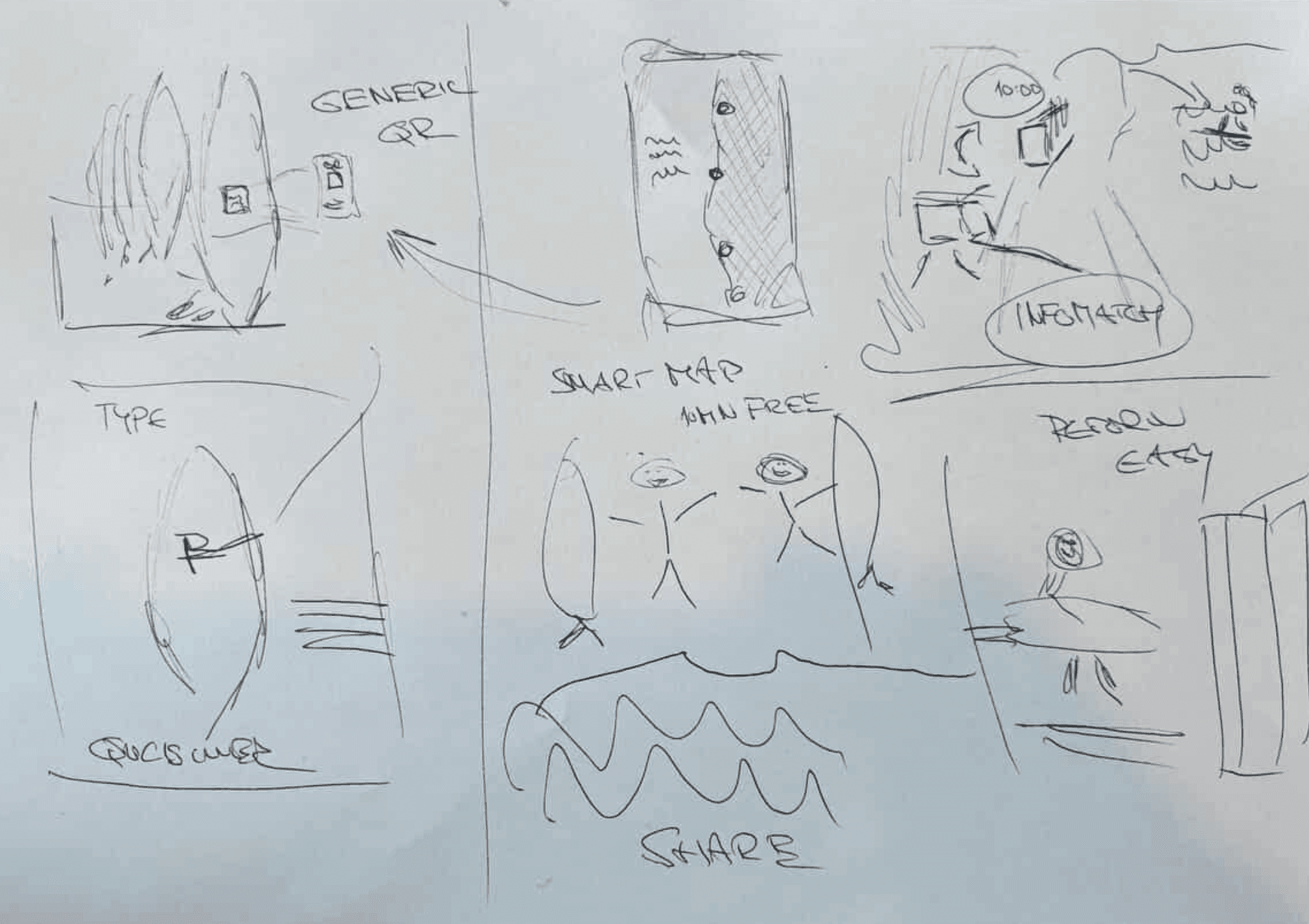
Before designing screens, I needed to visualise the 'big picture'. I sketched the entire service ecosystem connecting Lucas (the user) on the beach, the App interface, the IoT locker mechanism, and the coastal guard data integration. This free form mapping ensured that the technology served the physical context of surfing, not just the screen.
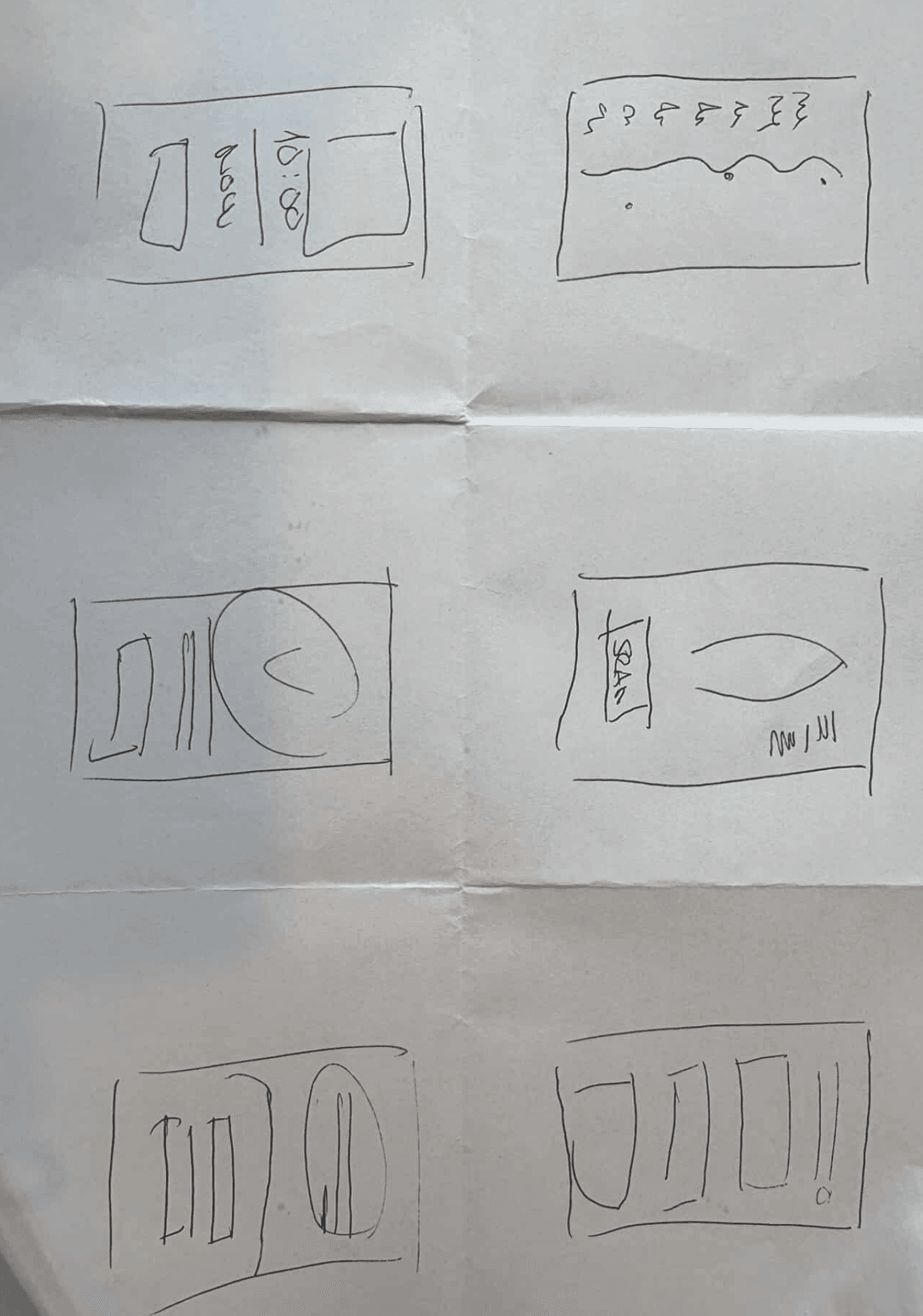
Crazy 8's
Once the system flow was defined, I zoomed in on the critical 'Scan to Rent' moment. Using the Crazy 8’s technique (8 sketches in 8 minutes), I forced myself to move beyond the first obvious solution. I explored various layouts for the unlocking interaction testing thumb zones, camera placement, and feedback messages to find the most intuitive path
From lo-fi to hi-fi
Prototyping & interaction
Based on the sketches, I moved into Figma to build a functional High Fidelity Prototype. My focus was on the 'Happy Path' the ideal user journey from locating a hub to unlocking a board. I established a clean visual language (UI Kit) that prioritised readability in bright outdoor conditions, using high-contrast elements and large touch targets for wet hands
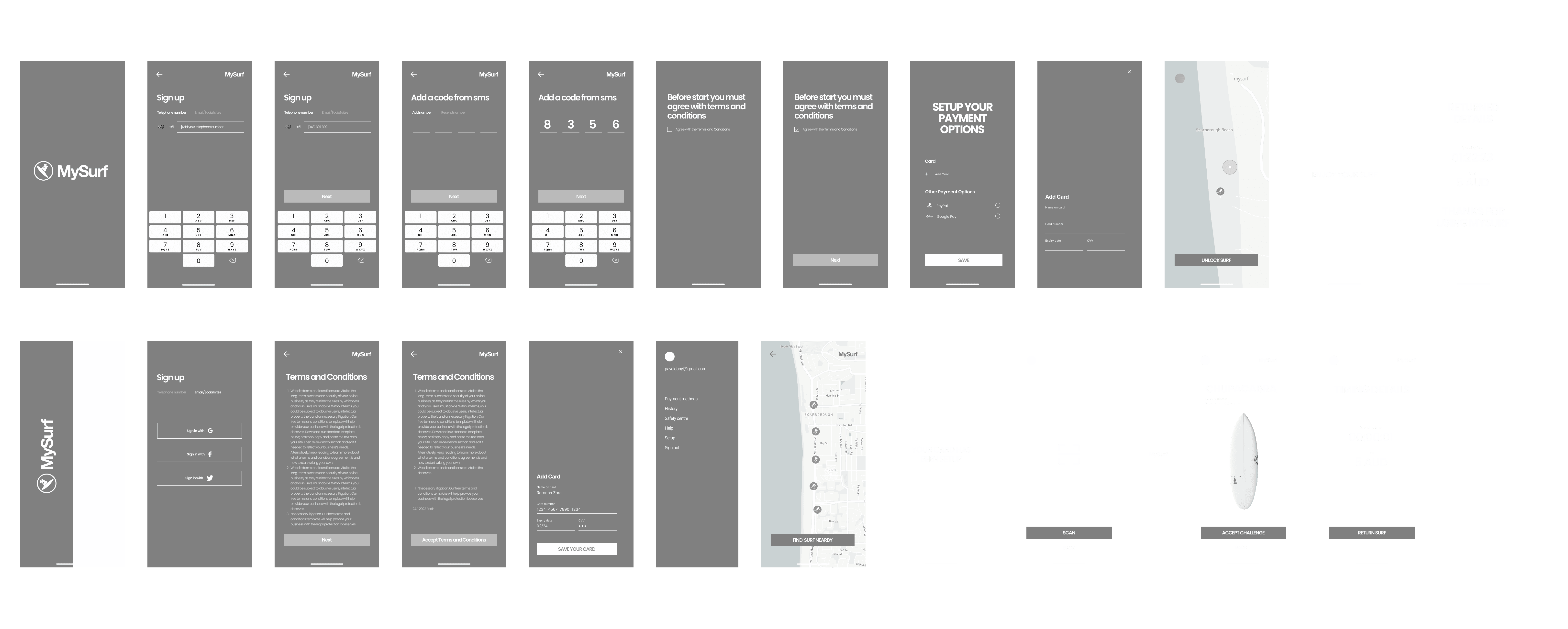
Digital wireframes
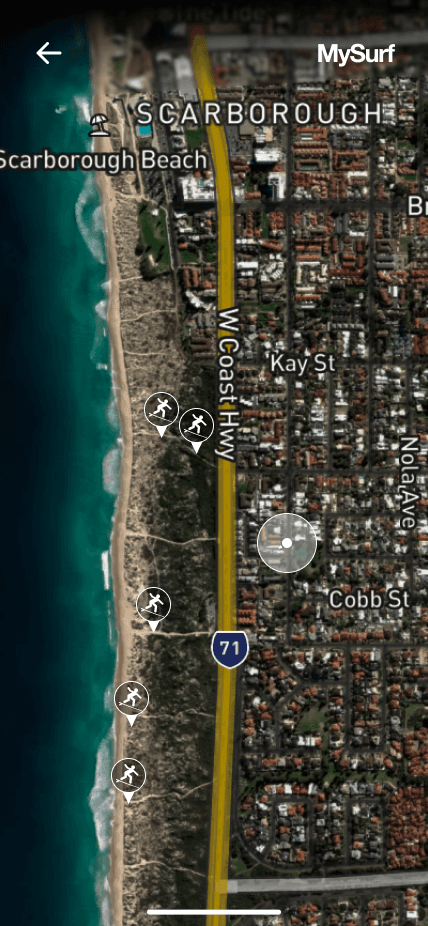
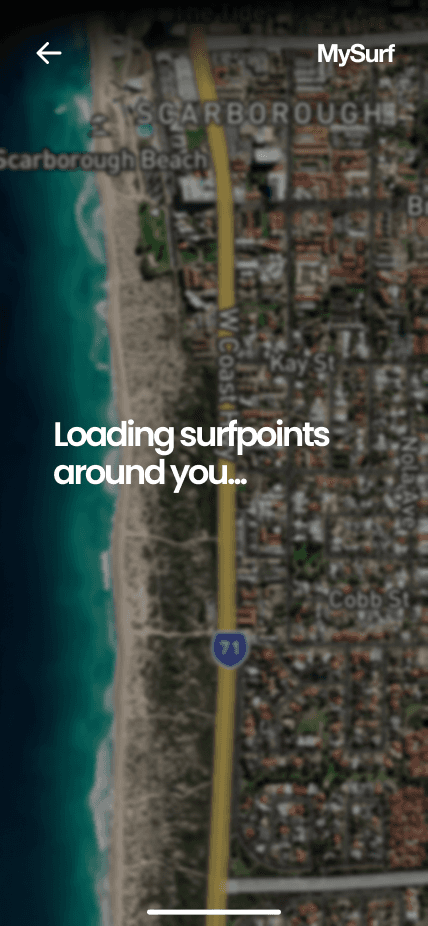
Before applying visual design, I moved into Figma to create Low-Fidelity Wireframes (Grayscale). This allowed me to focus purely on information architecture, spacing, and user flow without the distraction of colours or imagery. I validated that the 'Scan' button was accessible within the thumb zone and that the map interface remained legible.
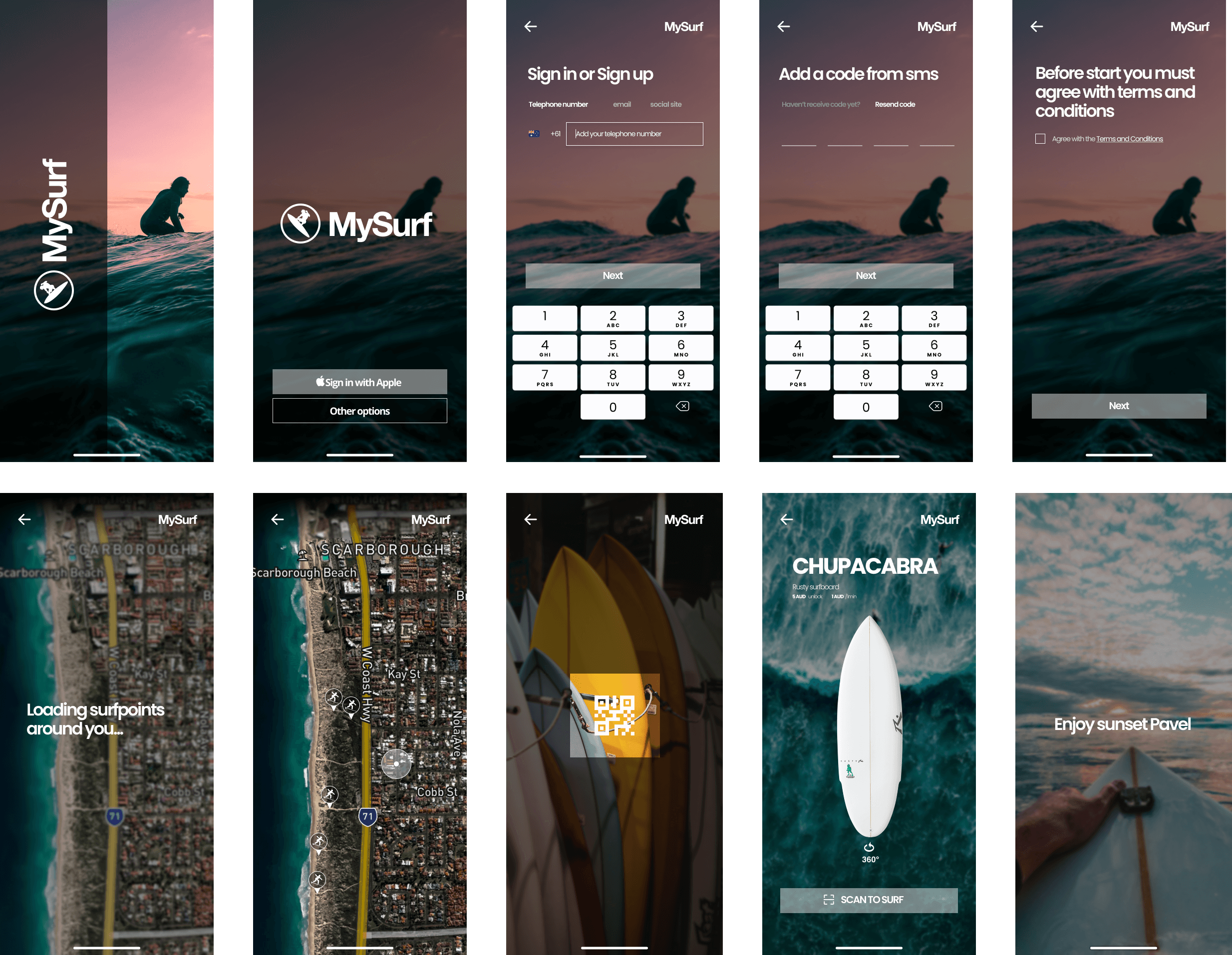
High-Fidelity UI
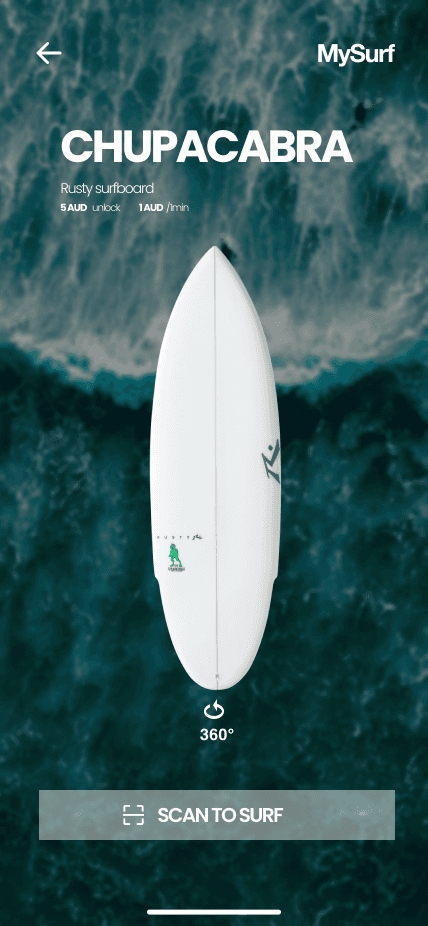
Once the structure was solid, I applied the visual identity to create High-Fidelity Screens. I chose a colour palette (Deep Ocean Blue & Safety Orange) that reflects the coastal environment while ensuring high contrast for outdoor visibility. I then connected these screens into an interactive Clickable Prototype to simulate the real-world experience.
Testing hypotheses
Validation & iteration
Based on the sketches, I moved into Figma to build a functional High Fidelity Prototype. My focus was on the 'Happy Path' the ideal user journey from locating a hub to unlocking a board. I established a clean visual language (UI Kit) that prioritised readability in bright outdoor conditions, using high-contrast elements and large touch targets for wet hands
Usability Testing
I validated the high fidelity prototype with 5 potential users (mix of backpackers and locals) using the 'Think Aloud' protocol. Participants were asked to complete a core scenario: 'Locate a nearby hub, check board availability, and unlock a beginner surfboard.' The goal was to identify friction points in the 'Scan to Rent' flow.
🔴 The Friction (Issue)
Price Anxiety: Users hesitated at the unlock screen because they weren't sure of the final cost. "What if I surf for 5 hours? Is it expensive?"
Safety Fatigue: Users skipped the text-heavy safety warnings, missing crucial info about rip currents.
Lack of Feedback: After tapping "Unlock", users looked confused about whether the physical locker opened.
🟢 The Fix (Design Iteration)
Added Price Capping: I introduced a "Max Daily Rate" badge and a clear "Estimated Total" based on selected duration to build trust.
Visual Onboarding: I replaced the text block with 3 swipeable graphical cards (Weather, Rips, UV Index) that users must acknowledge.
Sensory Feedback: I added a prominent success animation and a "Vibration/Sound" indicator to mimic the physical "click" of the lock.
The project conclusion
Outcome
The final 'My Surf' concept successfully bridges the gap between digital convenience and physical recreation. By automating the rental process, we removed the logistical barriers that prevented spontaneous surfing, creating a scalable solution for both locals and tourists
Takeways
The MVP proved that separating possession (owning a board) from access (renting on-site) is the key to unlocking the 'spontaneous' market. Users valued the Zero Carry Time proposition over the variety of equipment
Impact:
The solution transforms a high-friction service into a seamless utility. It unlocks 24/7 revenue without staffing costs. For the user, it cuts 'Time-to-Surf' from 45 mins to 3 mins, achieving a 4.8/5 satisfaction score.
What I learned:
I learned that designing for IoT requires thinking beyond the screen considering physical delays, sunlight, and wet hands. Crucially, I discovered that trust is the currency of automation; without the visible Safety Alert, users were hesitant to rely on a machine
Next Steps
Moving forward, the focus shifts to validating the hardware ergonomics and securing regulatory approval
Physical Prototyping: 3D print a scale model of the smart locker interface to test the ergonomic placement of the QR code and lock mechanism in real-world conditions.
Pilot Pitch: Present the usability data and Coastal Guard safety integration plan to the City of Stirling council to secure permits for a live trial at Scarborough Beach.