Improving
the Coworking Experience
A field-based service design internship in a coworking space in Bali. I mapped the end-to-end customer journey of digital nomads, validated pain points (work conditions, onboarding friction, and a “dead” feedback channel), and translated findings into a Service Blueprint. The next phase continues with a co-creation workshop with the staff to ideate solutions, define success metrics (ROI), and set up an ongoing discovery loop
Year:
2026
Category:
Service Design / UX Research
Client:
Tropical Nomad (Coworking Centre) Internship (University project)
Duration:
5 weeks, (ongoing)
Location:
Denpasar/Indonesia
Tools:
Miro, Typeform, Google Sheets / Excel, Google (Docs/Slides)
Design process:
Design Thinking, Double Diamond, Service Blueprinting
Coworking
Space
Connection
Experience
The project itself :
The context
Tropical Nomad is a coworking space in Bali built around one core promise: smooth, focused work. In practice, the experience depends on small moments fast onboarding, stable Wi-Fi across zones, clear rules for calls vs. quiet work, and an easy way to ask for help. This internship mapped those moments end-to-end and turned field insights into a Service Blueprint for improvement.
Hypothesis:
Most coworking issues aren’t “big problems” they’re micro-frictions that break flow (Wi-Fi dead spots, noise, unclear zoning, limited call rooms). I also assumed that passive feedback (QR on a wall) doesn’t work unless people see real impact.
Goal:
Create a practical Service Blueprint based on real field data and prepare the next phase: a staff co-creation workshop to ideate solutions, define success metrics (ROI), and set up an ongoing discovery loop.
My role:
Service Design Intern / UX Researcher end-to-end research, synthesis, and service blueprinting.
Responsibilities:
Service Safari
Stakeholder mapping
Staff interviews
Member interviews
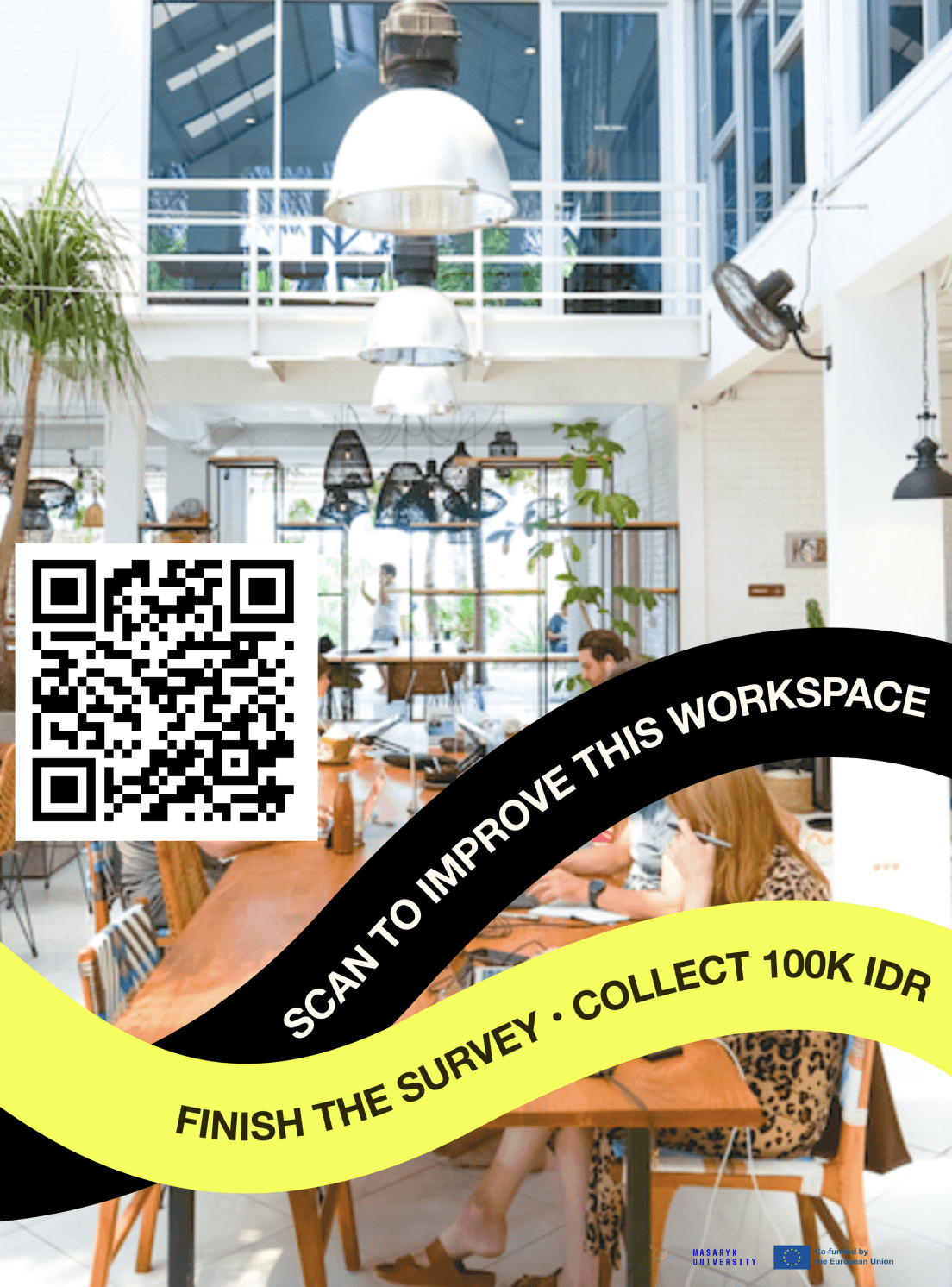
Survey (Typeform + QR test)
Review mining
Insights synthesis
Service Blueprint (Miro)
Workshop prep + metrics
Mapping the Service
Discovery
I started in the field not in slides. I observed how members arrive, set up, choose zones, and recover when something breaks. I then validated patterns through staff conversations, member interviews, a survey experiment, and review mining. The goal was to capture real service moments that affect deep work, comfort, and feedback behaviour.
Service Safari (Field observation)
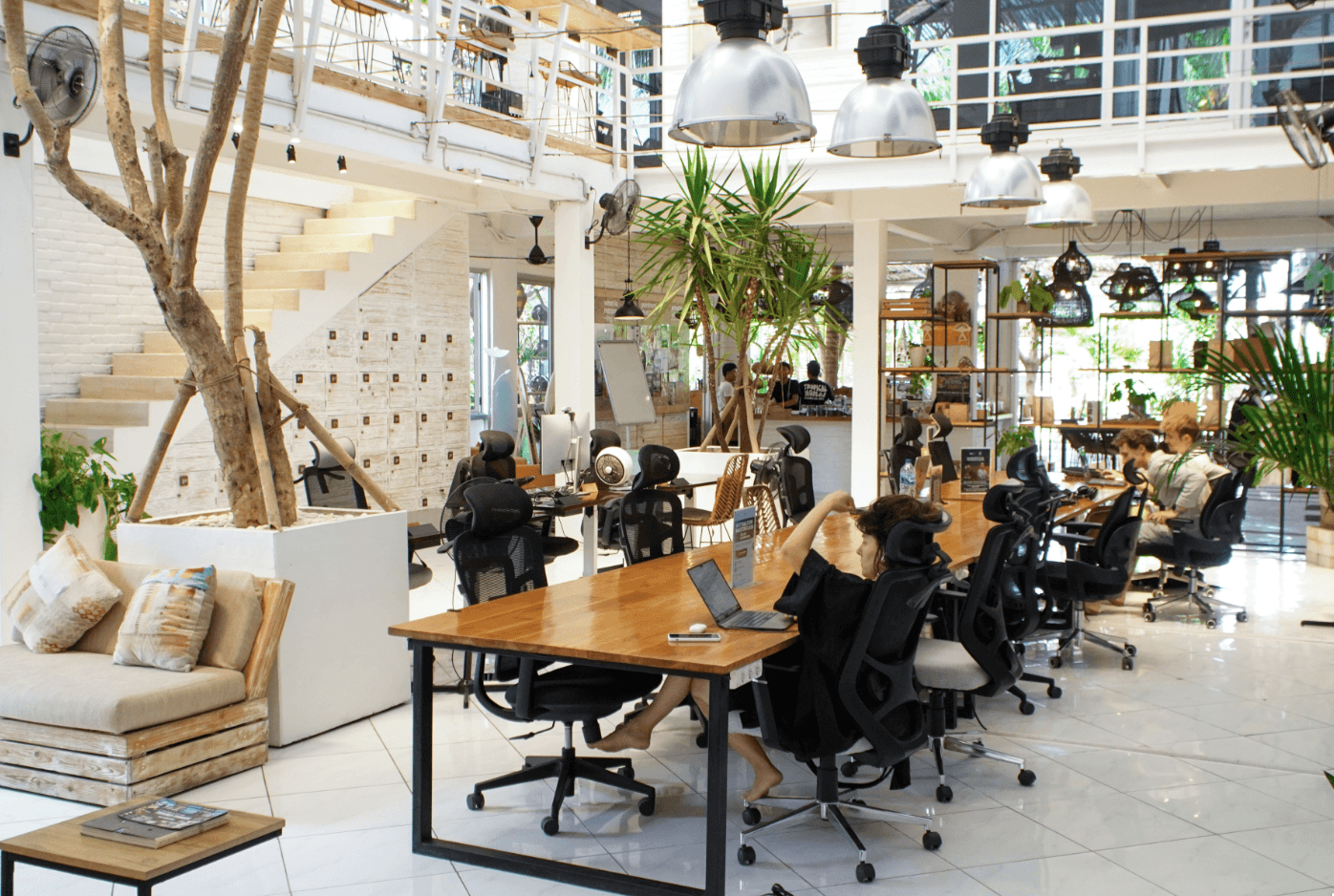
Before interviewing anyone, I mapped the service as it happens in real life: arrival, first-minute onboarding, Wi-Fi setup, zone selection, noise/calls, and how people ask for help. This created a grounded baseline and prevented me from designing solutions based on assumptions.
Stakeholder mapping
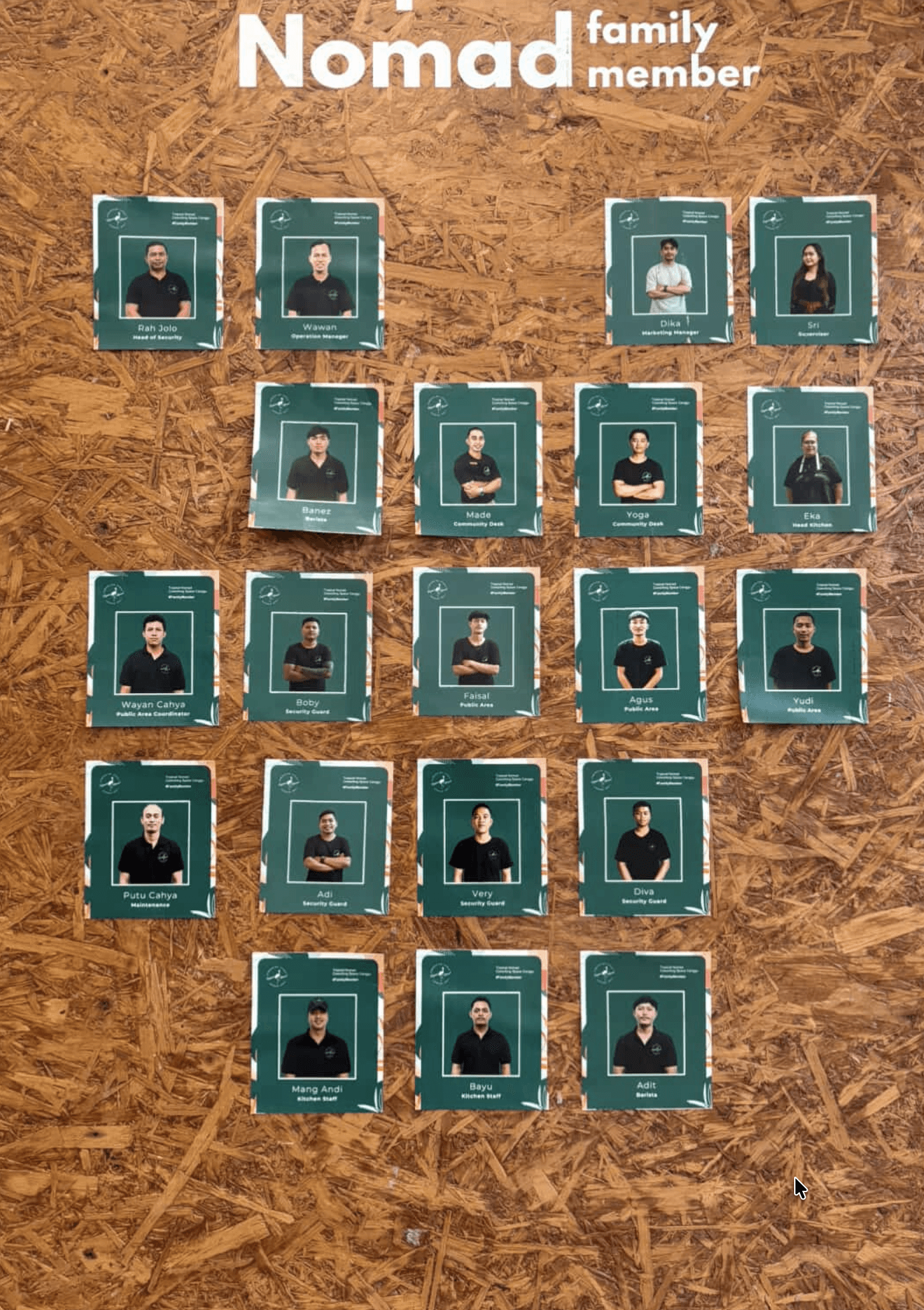
Coworking is a service system not a reception desk. Mapping stakeholders revealed who actually shapes the experience: Community Desk, Operations, Marketing, Security, Public Area staff, Maintenance, and F&B
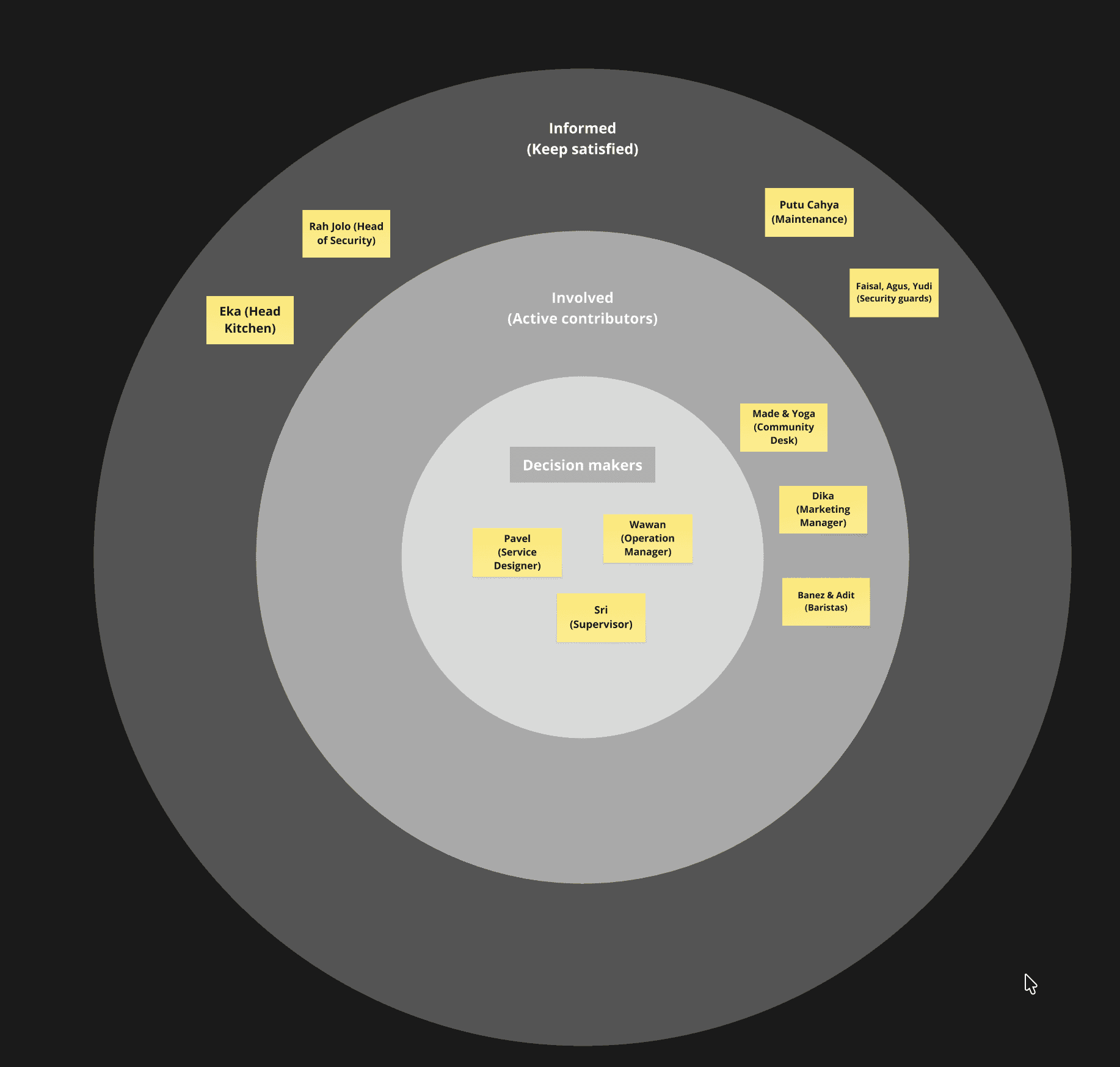
All service actors mapped (frontstage + backstage + user).
Decision makers vs active contributors vs support roles separated.
Third parties captured (Google, comms channels, ISP, contractors).
Stakeholder interviews
After mapping roles and influence, I ran short stakeholder interviews with Tropical Nomad staff to understand how the service works behind the scenes. The focus was on ownership: who handles onboarding, who resolves Wi-Fi/noise issues, how events are communicated, and where operational constraints appear in daily reality.
Role clarity:
I documented what each role actually does in the customer journey (Community Desk vs Public Area vs Security vs Maintenance vs Ops).
Ownership mapping:
For each recurring situation (setup, Wi-Fi, noise/calls, comfort), I captured who is responsible and who gets involved when it escalates.
Service reality check:
I captured operational constraints and informal routines that aren’t visible to members, but directly shape the experience.
I started with a simple idea: collect feedback through a QR survey placed on the internal wall. Typeform showed that people opened it, but almost nobody finished it. That moment was important it reminded me that coworkings are deep-work environments, and “passive feedback” competes with calls, deadlines, and focus.
So I pivoted. Instead of waiting for responses, I approached members directly, ran short in depth conversations, and in many cases filled the survey together with them. That shift immediately improved participation and gave me richer context behind the answers not just what people chose, but why.
"Listening properly, like even if they got out google translate - I’ve had to do that multiple times here… again Sri and Pavel are great here and are super helpful but the rest of the staff can be confused or dismissive"
anonym comment
Making sense of the field
Define
After collecting evidence in the field, I distilled the work into a clear problem picture. This phase focused on naming what truly breaks the coworking experience for deep-work nomads and translating scattered observations into a shared service model that the team can act on.
Service Blueprint
To turn fragmented insights into a shared, actionable view, I created a Service Blueprint of the Tropical Nomad experience from “looking for a coworking” to onboarding and daily deep work.
The blueprint connects customer actions with frontstage staff actions, backstage operations, and third-party dependencies (Wi-Fi provider, comms channels, Google Reviews).
It became the single source of truth for where breakdowns happen and who is involved at each moment.
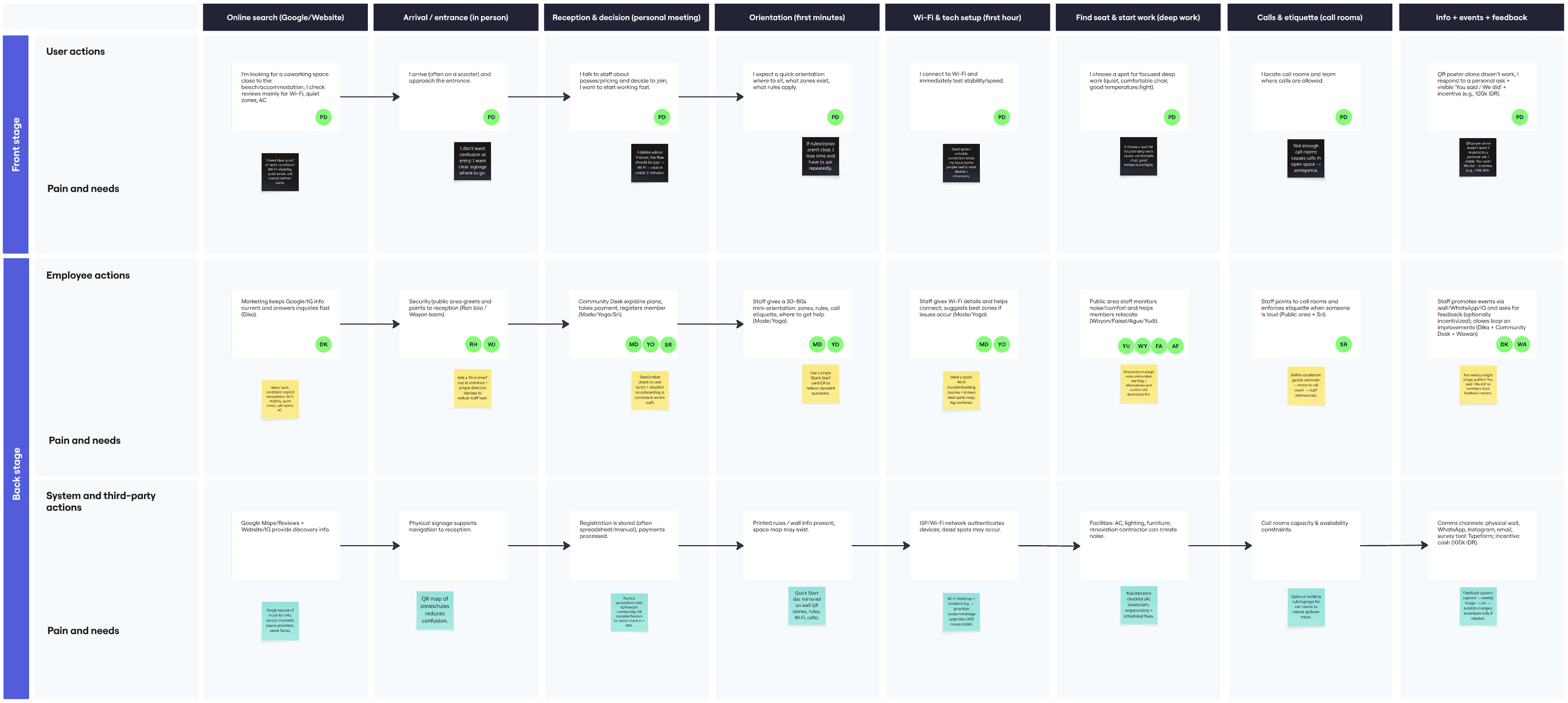
End-to-end service view:
I documented what each role actually does in the customer journey (Community Desk vs Public Area vs Security vs Maintenance vs Ops).
Frontstage / backstage clarity:
What members see vs. what needs to happen internally to make it work.
Frontstage / backstage clarity:
Wi-Fi, call room capacity, noise/maintenance, and communication channels.