About:
Imagine this: you’re an Aboriginal applicant in Australia, about to apply for a job. Before you can even show your skills, the hiring form asks you to declare your identity.
What feels like a routine question for most people suddenly becomes a moment loaded with doubt: “Should I say it? Will it affect my chances? What if it changes how they see me?”
Digital hiring processes often include seemingly neutral steps, such as identity declarations, background questions and eligibility checks, that can carry disproportionate emotional weight for Aboriginal applicants. These small interactions can trigger hesitation, fear of discrimination or a sense of vulnerability long before the interview even begins.
Category:
VR concept
Client:
Masaryk University
Duration:
7 weeks
Location:
Perth, Western Australia
Design framework:
VR for good, spatial storytelling
Tools:
Miro, Figma, ShapesXR, Adobe Premiere, Gemini, YouTube
Discover
Explore
Prototype
Deliver
The problem:
Digital hiring processes include seemingly neutral steps, such as identity declarations, that carry disproportionate emotional weight for Aboriginal applicants and can trigger hesitation or fear of discrimination before the interview even begins.
Goal:
Turn a missing form into a story. Design a VR space where the tension is not told but felt, without dialogue or explanation.
My role:
Designer on a seven week university assignment at Masaryk University. Research, concept, spatial prototyping in ShapesXR and a teaser video.
Methods:
•
Desk research
•
Brainstorming
•
AI ideation
•
Peer feedback
•
Moodboard
•
Narrative research
•
Spatial prototyping
•
Teaser video
Discover
It started with a question on a job form and a university brief to design a VR experience. I had no background in VR, so I began with people, context and real stories.
/01
A question on a form
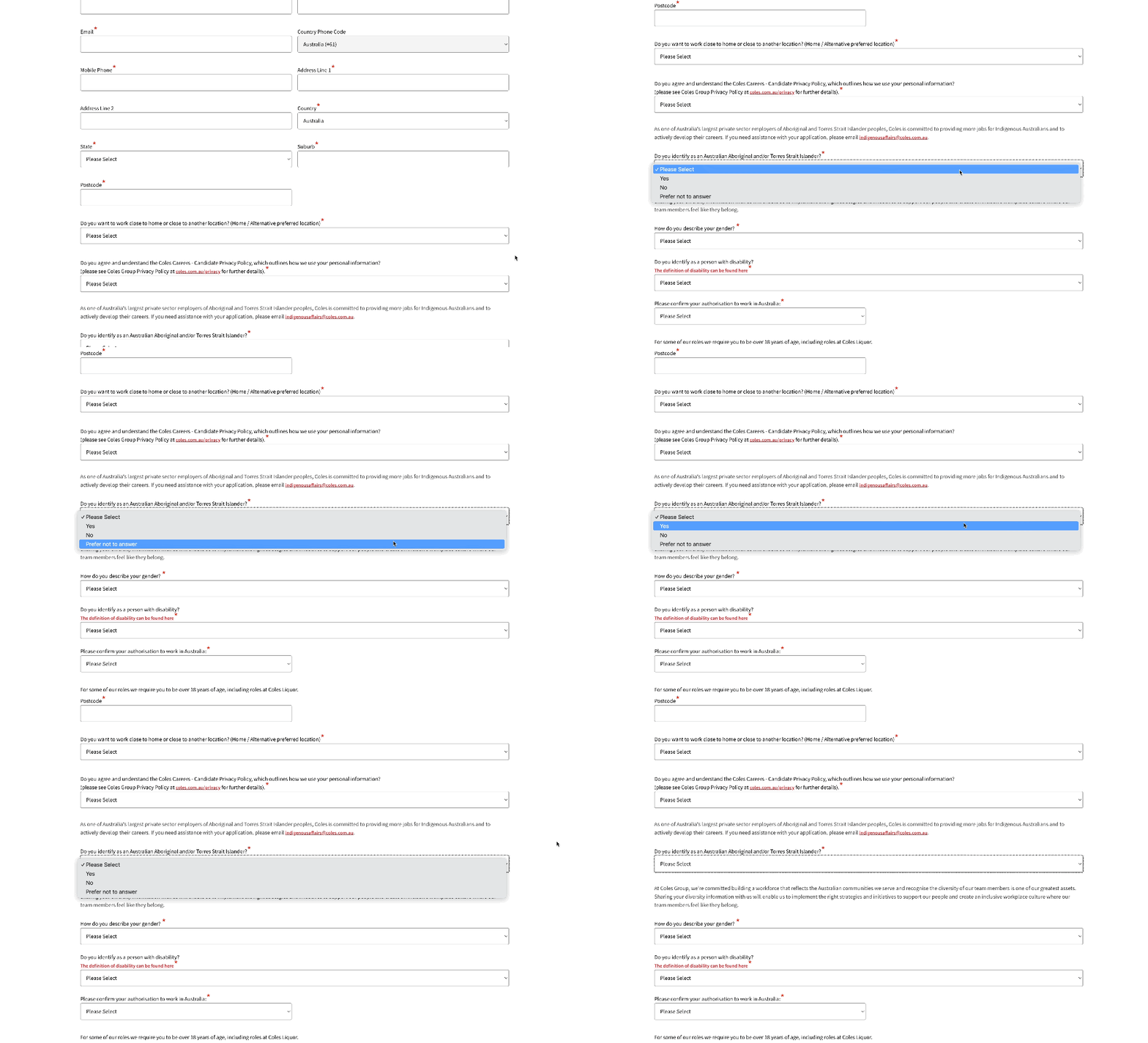
The project grew from one moment in a digital hiring process: a required question asking applicants whether they identify as Aboriginal and/or Torres Strait Islander.
For most people it is a routine checkbox. For Aboriginal applicants it can be the point where doubt enters the process, long before anyone looks at their skills.
/02
Laying the groundwork
As part of a university assignment, we were asked to design a VR experience. I had no background in VR, but one project from earlier lectures stuck with me: We Are Always Here from the VR for Good series. It showed how VR can quietly carry emotion through space, not explanation.
That idea stayed with me. I started reflecting on everyday interactions that carry invisible tension. The experience of filling in forms stood out, especially the question about Aboriginal identity. I remembered conversations with a friend who is Aboriginal, and validated my assumptions with her to ground the concept in real experiences.
From there, I began shaping a space where the tension isn’t told but felt.


/03
Ideas and early feedback
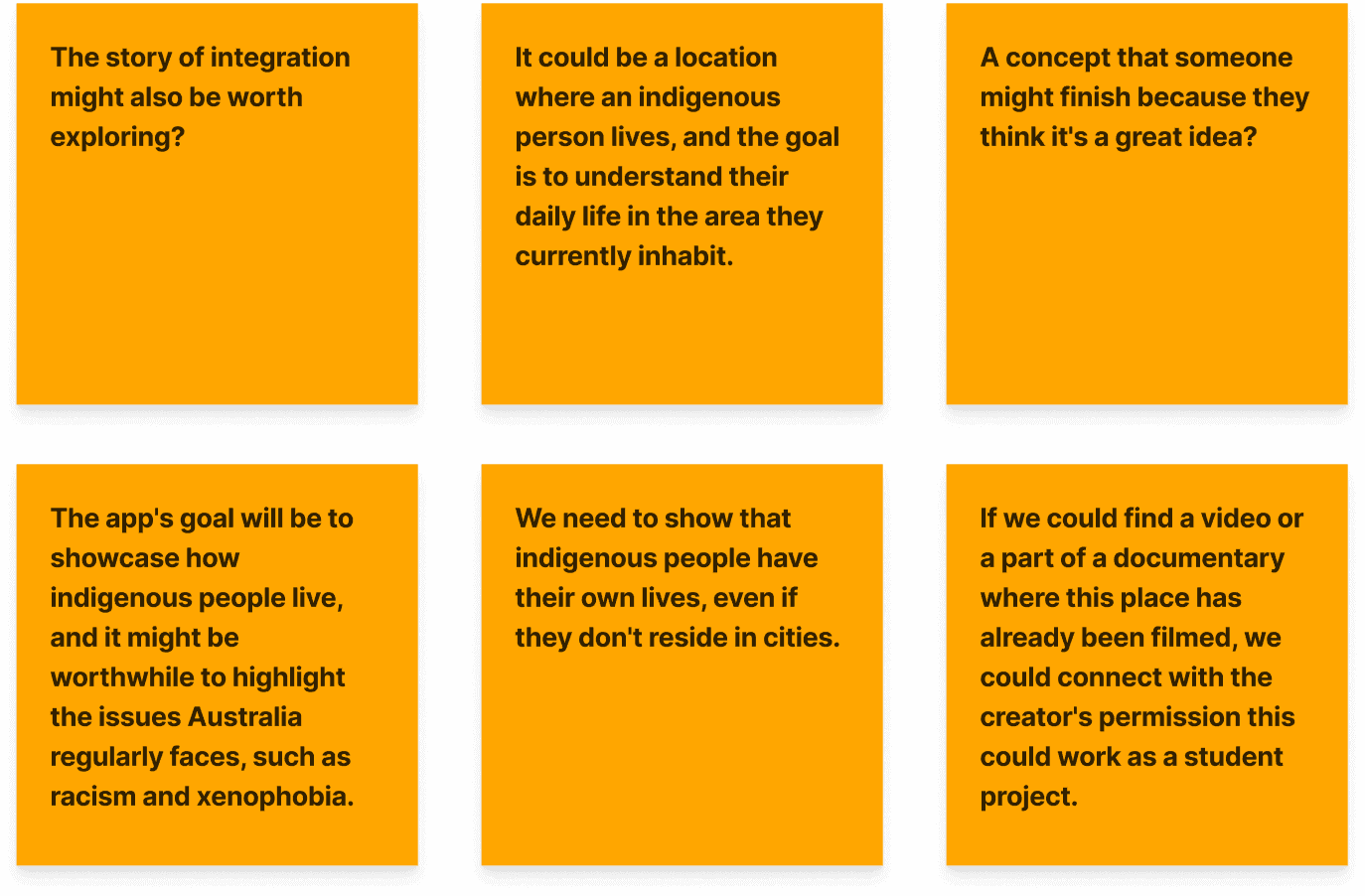
I used AI to widen the range of possible directions, then shared the strongest ideas with classmates. Their questions were simple and useful: who is this for, how will you build it, and is there enough time?
The feedback pushed the concept towards something small, focused and possible within seven weeks.

Explore
Once I gathered context and real input, I started visual exploration. I wasn’t looking for drama, but for spaces where systems quietly create pressure.
/01
Moodboard and narrative research
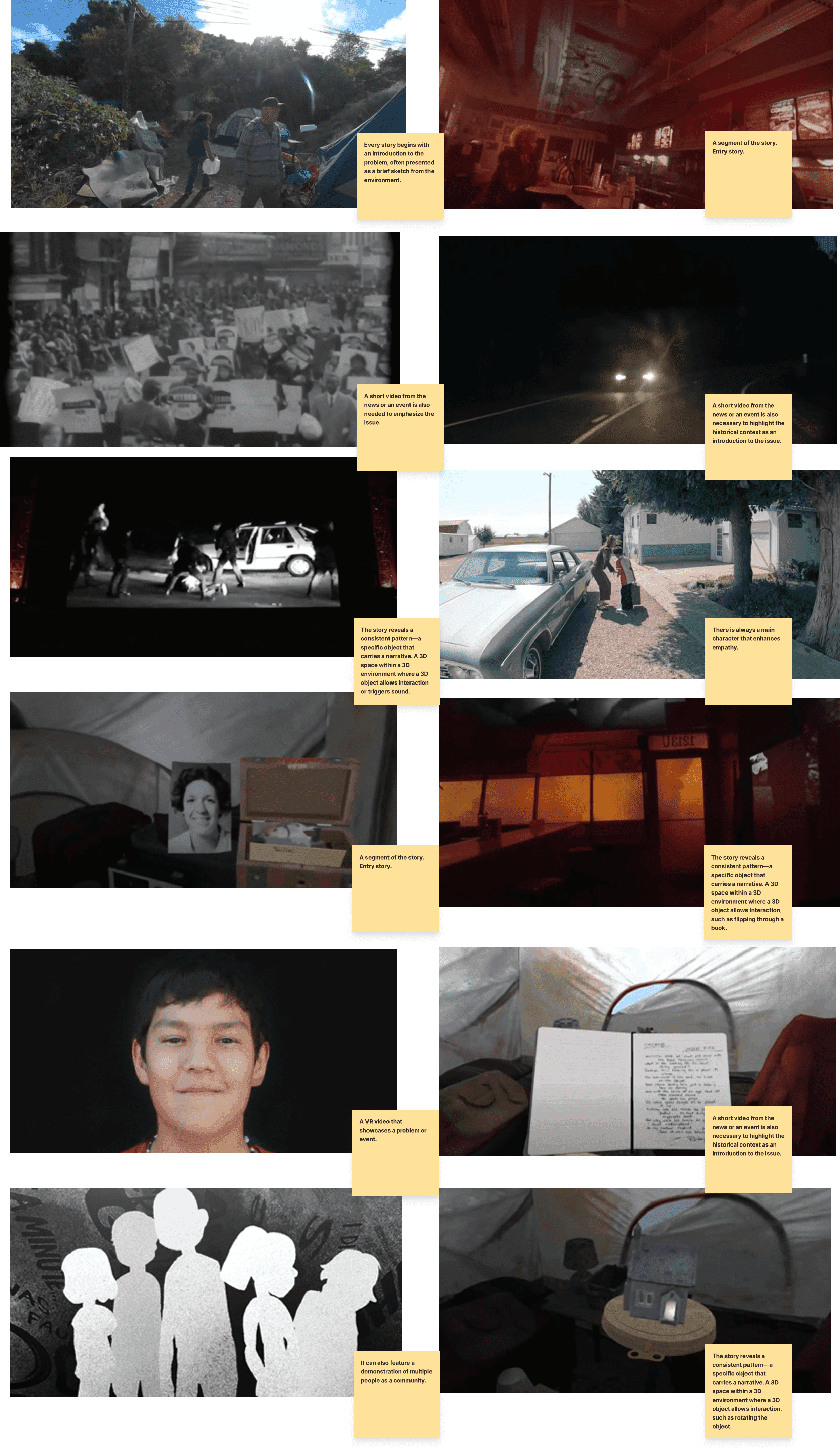
I created a moodboard to map possible scenes and tones, including public offices, schools, police interactions and job interviews.
Narrative research helped me understand which moments carry weight in real life, and which would only add noise to the experience.

/02
Letting the space talk
The job interview scene stood out: it’s familiar, controlled and filled with unspoken rules.
From there, I began sketching how the space could “talk”, not through voice, but through cues like awkward silences, alerts on screen or subtle tension in posture. The idea wasn’t to recreate a conversation, but to let users feel the weight of it without words.

Prototype
I wanted to follow the spirit of We Are Always Here, with no dialogue and a space that communicates through its environment.
/01
Interface fragments in Figma
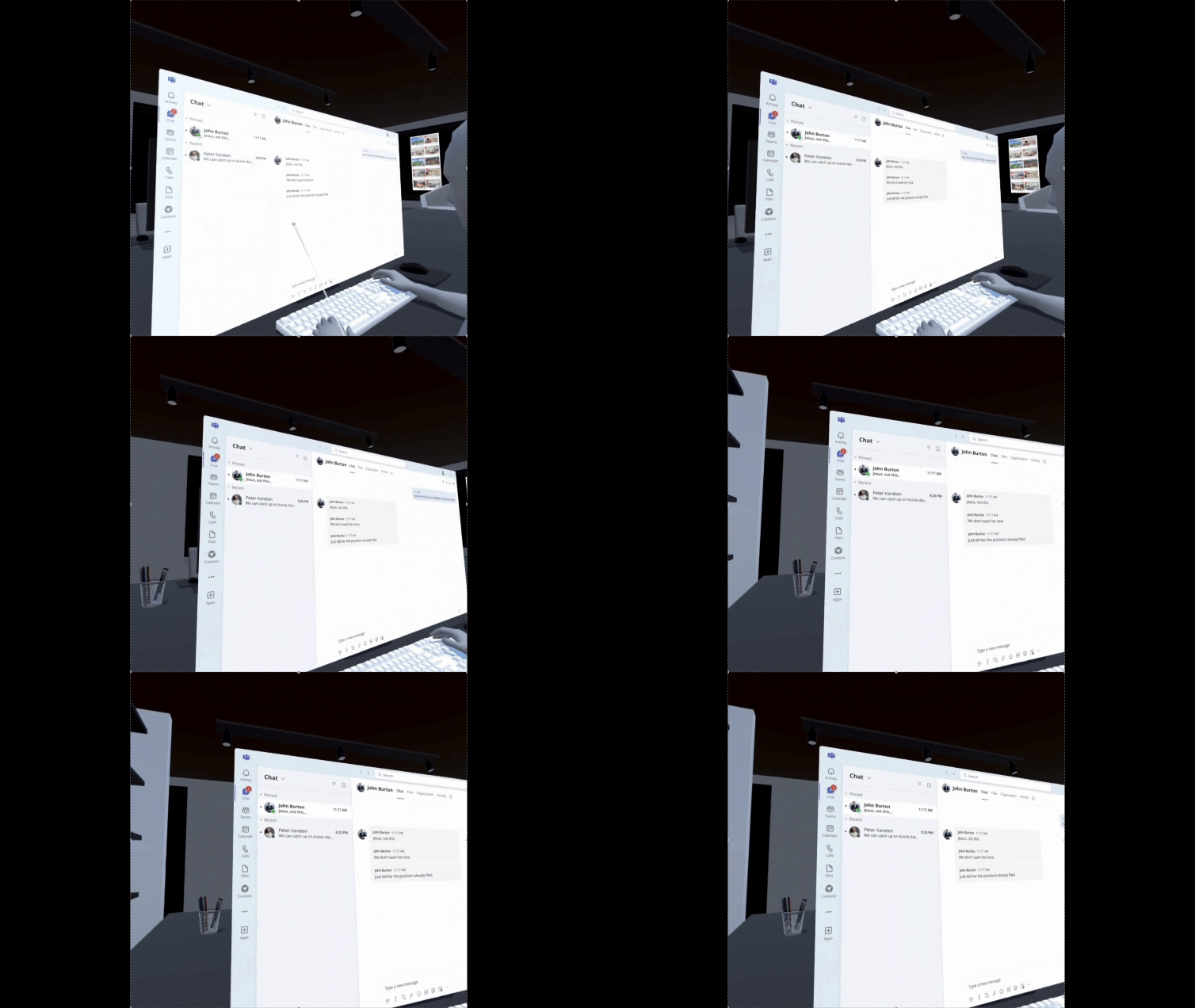
Before moving into the headset, I designed the interface fragments that appear inside the scene: a chat thread, a voice message and a work chat on the monitor.

/02
First setup in ShapesXR
I began by building a simple test scene in ShapesXR to understand how elements behave in space, how different interactions such as clicking or gaze feel, and what naturally draws or shifts attention.
ShapesXR let me quickly test layouts and interaction flows without focusing on visual fidelity.


/03
A room that uncovers itself
I explored several scene ideas, but the job interview stood out as structured, familiar and full of unspoken expectations. I designed the space so the user uncovers key moments gradually. A note on the desk. A voice message. A fragment of conversation. An alert on the screen.
I removed anything that explained too much or broke the atmosphere. The aim was to create quiet tension. A room that never says something is wrong, but still makes you feel it.

Deliver
The final result was a VR prototype built in ShapesXR, designed as a familiar but uneasy job interview scene, and a short teaser video.
/01
VR prototype
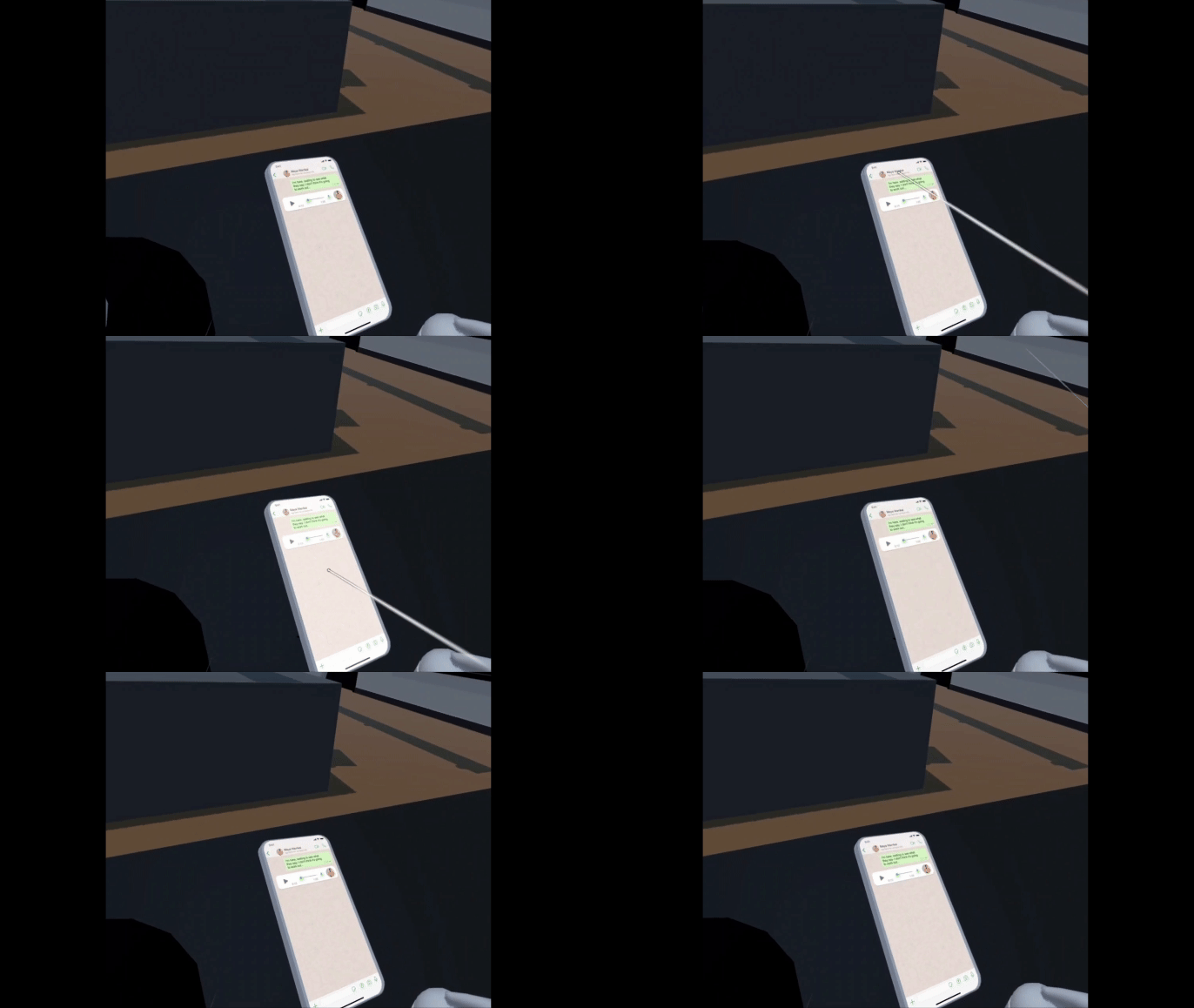
The experience was built around fragments: a missing application alert, a voice message and personal details hinting at life beyond the room.


/02
Teaser video
Alongside the prototype, I created a short teaser video that connects the project’s main themes: interior scenes, interface moments and text fragments.
Editing the teaser helped me see the sequence more clearly: what appears first, what carries emotional weight and how tension builds. It also worked as a quick validation of the story.
Outcome
This was my first time designing for VR. A lot of things felt unfamiliar at the start: how to pace interaction, how space affects focus, and how to build meaning without explanation.
/01
What I learned
I learned how to work within XR constraints and how small details in space can carry emotional weight when placed with care.
/02
What I would do differently
Looking back, I would test more, even on paper, to check which parts actually work and which are unnecessary.
The process showed me that storytelling through space doesn’t have to be loud. Quiet tension can speak just as clearly.
© More works
(WDX®)
digital design


© help centre
(WDX)
clarification

Let’s talk