Seminar 3: designing from the inside out
SEMINAR 3
Life after death is rarely a topic discussed in design studios. Yet, our digital footprints remain long after we are gone. In this reflection, I explore how speculative design can bridge the gap between memory, technology, and existence through my semester project: Afterlife.

MUNI
Interview
University
Design Thinking
The philosophy of the edventure canvas
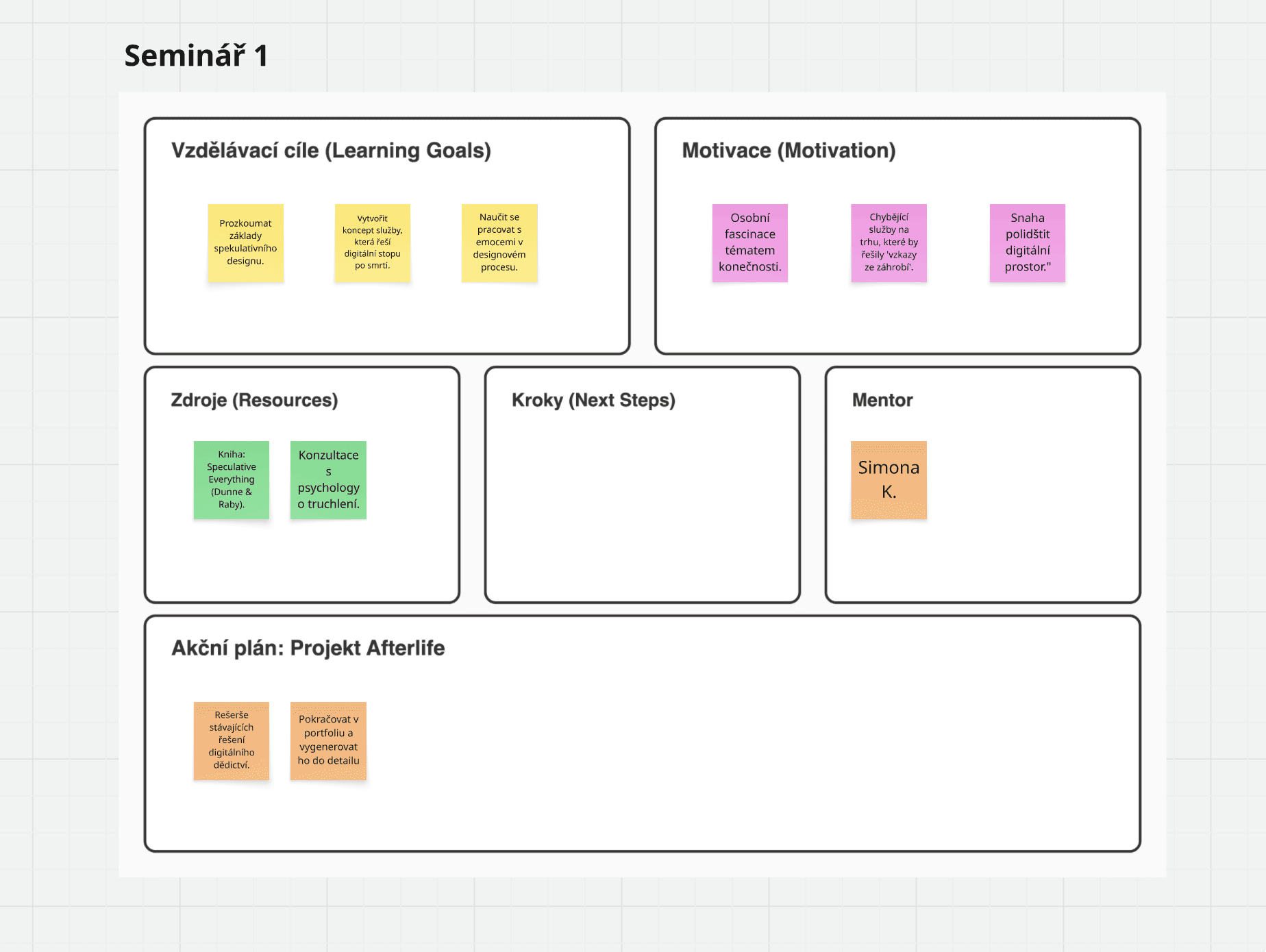
The start of my journey at KISK was marked by self-reflection. Through the Edventure Canvas, I didn’t just set academic goals; I defined a personal mission. My background led me to wonder: How can design handle the most human experience of all death? I realized that most current digital services fail during the transition of loss, leaving families with technical burdens instead of meaningful memories.
Learning through speculation
My goal was to master Speculative Design. I shifted my focus from purely functional interfaces to emotional experiences. By studying resources like Dunne & Raby’s Speculative Everything and consulting with experts on digital legacy, I began to prototype a service that serves as a "Digital Estate."
The Afterlife concept
The project "Afterlife" is a decentralised platform where users curate their legacy. It’s not just about data; it’s about the "right to be remembered" versus the "right to be forgotten." During my consultations with my mentor, Simona K., we dove deep into the ethics of data how to ensure a user's dignity is preserved through automated "release triggers" for messages and the curation of digital memories.
Reflection and growth
This seminar taught me that as a designer, I am not just a problem-solver for business, but a curator of human stories. "Afterlife" is my first step into understanding the profound responsibility we have when we build products that outlive their creators.